



Quick Summary
Brief explanation of society registration, a process where organizations legally establish themselves as societies in order to operate and fulfill their mission within the framework of the law. importance of understanding the benefits and procedures of society registration to maximize the potential impact of social initiatives.
Benefits of Society Registration
- Enhanced legal recognition and credibility: Society registration provides organizations with a recognized legal status, instilling trust and credibility among stakeholders, including government bodies, donors, and the public.
- Access to funding and grants: Registered societies often gain eligibility for various funding opportunities, grants, and sponsorships offered by government agencies, foundations, and other funding bodies, boosting financial resources for their projects and activities.
- Tax exemptions and financial advantages: Society registration can lead to tax-exempt status, reducing the financial burden on the organization and allowing more resources to be directed towards fulfilling the societal objectives.
- Increased visibility and networking opportunities: Registered societies often enjoy increased visibility and recognition, opening doors to collaborations, partnerships, and networking opportunities with other organizations, businesses, and government entities.
- Ability to own property and enter into contracts: Society registration enables organizations to own property, enter into legal agreements, and carry out transactions in their name, facilitating operational activities and growth.
Procedures for Society Registration
- Researching and understanding relevant laws and regulations: Thoroughly researching the legal requirements and regulations related to society registration in the specific jurisdiction is crucial to ensure compliance and a smooth registration process.
- Choosing the appropriate type of society:Determining the most suitable type of society, such as trust, non-profit, or community-based, based on the organization’s mission and goals.
- Gathering necessary documentation and information: Collecting and organizing required documents, such as proof of address, identification of office bearers, and the organization’s constitution or bylaws.
- Formulating a constitution and bylaws: Developing a well-defined constitution and bylaws that outline the purpose, structure, governance, and operational procedures of the society.
- Holding a general meeting and electing office bearers: Conducting a general meeting where members elect office bearers, define roles and responsibilities, and collectively decide on important matters related to the society.
- Submitting the registration application and required fees: Completing the registration application form and paying the prescribed fees to the relevant government department or authority responsible for society registration.
- Fulfilling post-registration requirements, if any: After successful registration, fulfilling any additional requirements such as annual reporting, maintaining proper financial records, and adhering to regulatory obligations to ensure ongoing compliance.
Challenges and Considerations
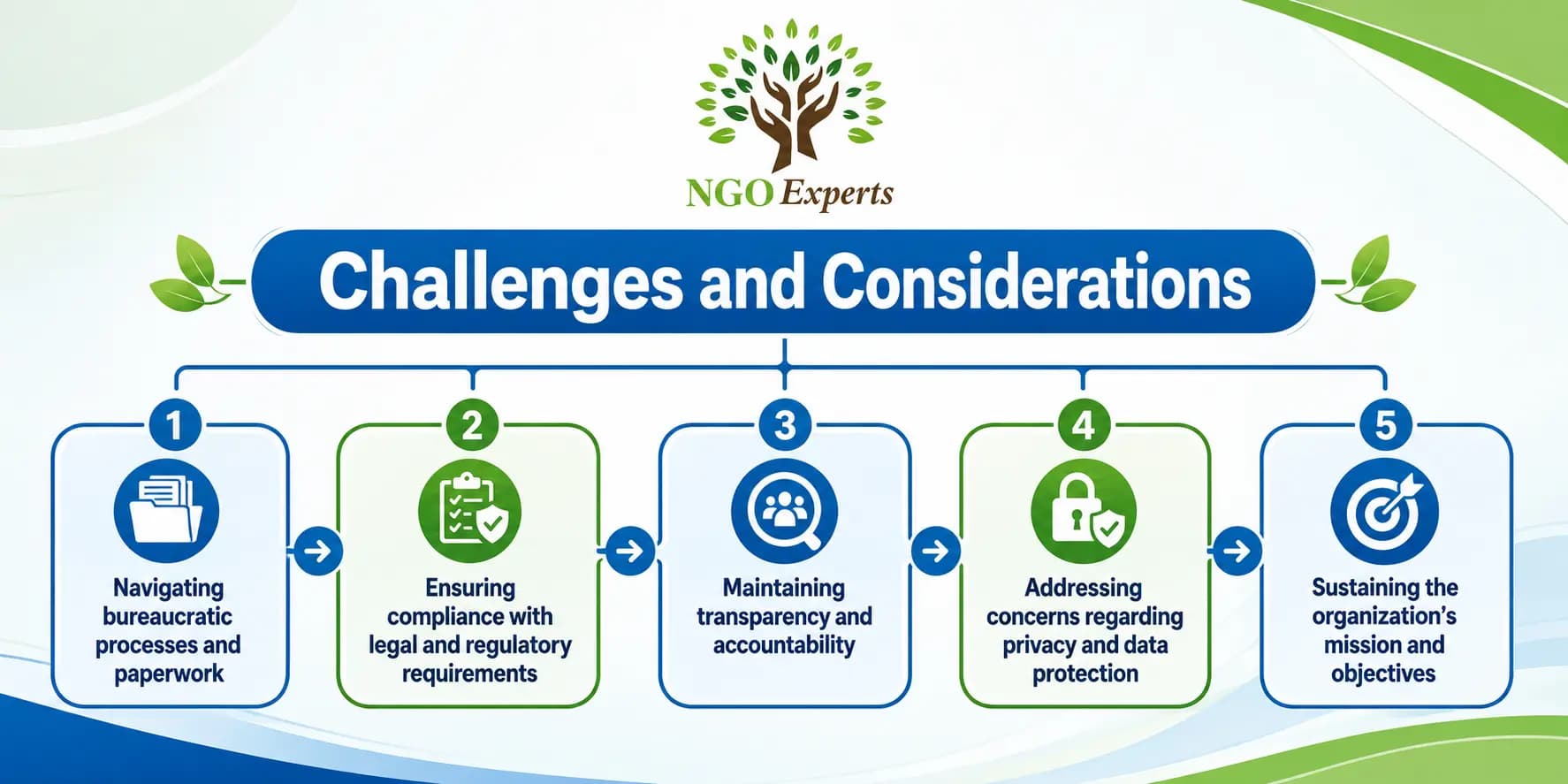
- Navigating bureaucratic processes and paperwork: Society registration may involve dealing with bureaucratic processes, paperwork, and potential delays, necessitating patience and persistence throughout the registration process.
- Ensuring compliance with legal and regulatory requirements: Understanding and adhering to the legal and regulatory obligations associated with society registration to avoid penalties, fines, or potential deregistration.
- Maintaining transparency and accountability: Registered societies are expected to maintain transparency in their operations, financial management, and decision-making processes, demonstrating accountability to their stakeholders.
- Addressing concerns regarding privacy and data protection: Societies should consider privacy and data protection regulations when collecting, storing, and utilizing personal data of their members, employees, and beneficiaries.
- Sustaining the organization’s mission and objectives: Society registration is a starting point, and organizations must actively work towards sustaining their mission and objectives by adapting to evolving societal needs and challenges.
Case Studies and Success Stories
- Highlighting examples of societies that have experienced significant benefits from society registration, showcasing their achievements, and the positive impact they have made in their communities.
- Demonstrating how society registration has enabled organizations to unlock opportunities, expand their reach, and effectively contribute to social change.
Conclusion
The benefits and procedures of society registration, emphasizing its role in providing legal recognition, credibility, and access to resources for organizations. encouraging individuals and organizations to explore society registration as a means to unlock opportunities and amplify their social impact.
Frequently Asked Questions
What is Society Registration?
Society Registration is the legal process of formally establishing a group of individuals as a society for charitable, educational, social, cultural, or other permitted objectives. It provides the organisation with legal recognition and a formal structure for carrying out its activities.
What are the benefits of Society Registration?
Society Registration provides legal recognition and can improve an organisation’s credibility. A registered society may also become eligible for certain grants and funding opportunities, partnerships, and other resources, subject to applicable requirements.
What documents are required for Society Registration?
Commonly required documents include identity and address proofs of office bearers or members, registered office address proof, the society’s constitution or bylaws, Memorandum of Association, and other documents prescribed by the relevant authority.
What is the procedure for Society Registration in India?
The general process involves understanding the applicable law, selecting the appropriate structure, preparing the constitution and bylaws, gathering required documents, conducting the required general meeting, submitting the registration application with prescribed fees, and completing applicable post-registration requirements.
What are the post-registration requirements for a registered society?
After registration, a society should maintain proper financial and organisational records, comply with applicable reporting requirements, maintain transparency in its operations, and fulfil other legal and regulatory obligations applicable to the organisation.
Author
Sakshi Kashyap
I am a dedicated and detail-oriented Website Content Writer with over two years of experience in creating compelling, reader-friendly, and SEO-optimized content. My expertise lies in developing well-structured web pages, landing pages, blogs, and service descriptions that enhance user engagement and drive organic traffic.
Written by Sakshi Kashyap. Last updated on October 8, 2026

