Trust Registration

Trust registration is the first step in establishing a legal entity for charitable purposes. With proper compliance, you can enjoy the benefits of tax exemptions and more..

  • Minimum of two persons
  • Compliance with Indian Trusts Act, 1882
  • Objectives aligned with Indian laws and regulations..

Contact Form

Your Trust Registration with NGOExperts

Cta Image

NGOExperts Premium – Our Services

For NGOs, trusts, societies, and businesses, we provide complete support in registrations, compliance, and funding. From NGO/Trust/Society setup to 12A, 80G, FCRA, NITI Aayog, and CSR project reports, our experts handle everything seamlessly to keep you compliant and fund-ready.

Features:

  • End-to-end documentation and application support.
  • Quick turnaround time for all filings.
  • Expert guidance on compliance and funding readiness.
  • Dedicated specialists for NGO and CSR processes.

Note:

  • First-year compliance support included.
Talk To NGOExperts

Quick Summary

Trust registration in India is a legal process under the Indian Trusts Act, 1882, to create a charitable, family, or estate-based trust with official recognition. It involves drafting a trust deed, appointing a trustee and settlor, and submitting documents to the registrar. Trusts offer tax exemptions, legal protection, and public credibility, making them ideal for charitable work or succession planning. The process involves documentation on stamp paper and filing with the registrar, which is typically completed within 7–10 working days. Once registered, the trust remains valid permanently, unless it is legally modified or dissolved. NGOExperts provides complete support from deed drafting to certificate issuance.

Introduction

Trust registration in India is the legal process of establishing a charitable trust, family trust, or private trust to manage and safeguard assets for beneficiaries. The core of this process is trust deed registration, which makes the trust legally valid and recognized under Indian law. Without a registered deed, a trust cannot claim legal status or avail tax benefits.

The trust registration process involves drafting a detailed trust deed, submitting documents with the Registrar of Trusts, completing deed registration, and complying with income tax regulations. To maintain transparency, applicants can also perform a trust registration online check through the Registrar’s official portal to verify their application status anytime.

Registering a trust offers several advantages, including asset protection, tax exemptions, estate planning, and legal credibility for receiving donations and government support. Since drafting a trust deed and selecting the right structure can be complex, professional guidance ensures smooth registration and maximized legal and tax benefits of trust registration.

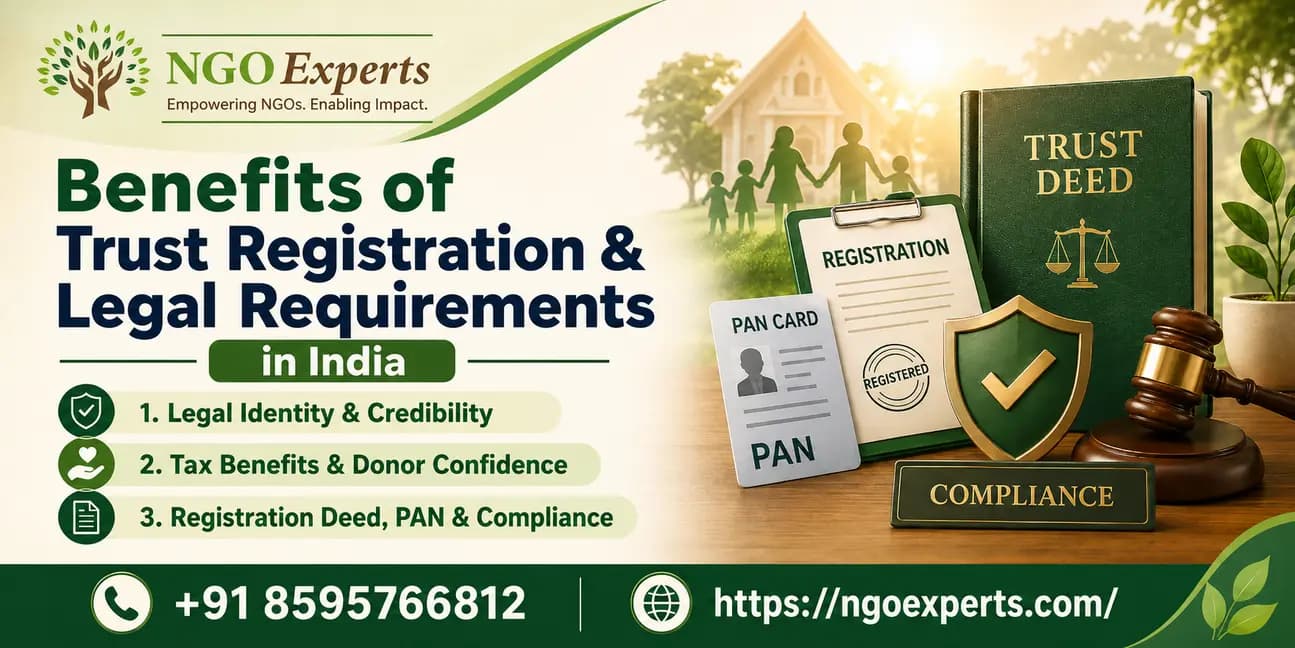
Benefits of Trust Registration

Trust registration is not just a legal formality; it brings long-term value and protection to your assets, family legacy, or charitable purpose. Here are some key advantages of completing the trust registration and securing a valid trust registration certificate.

Benefits of Trust Registration

Tax Exemptions

By establishing a trust, families can potentially reduce their tax obligations, especially estate taxes. Trust structures allow for various tax-exempt strategies that can save money for the family in the long run.

Limited Liability

Registered trusts offer limited liability protection to their trustees. Unlike individual or unregistered trusts, a trust registration certificate provides formal legal recognition and can protect trustees from personal liability in case of legal disputes.

Legal Protection for the Family Wealth

Trusts provide an additional layer of legal protection for family assets. Since trusts are separate legal entities, creditors & lawyers have a harder time accessing the assets in the trust.

Enhanced Credibility

Trust registration enhances the trust’s credibility, as the trust’s objectives, trustees & beneficiaries are put on public record. Many funders and institutions prefer working with organizations holding a trust registration certificate.

Charitable Undertakings

Trusts can be set up for charitable purposes, allowing families to leave a lasting legacy in the community. Charitable trusts may benefit from tax exemptions as well, providing potential savings to the family while making a positive impact on society. You may also apply for DARPAN registration for a trust to access government grants and CSR support.


Types of Trusts

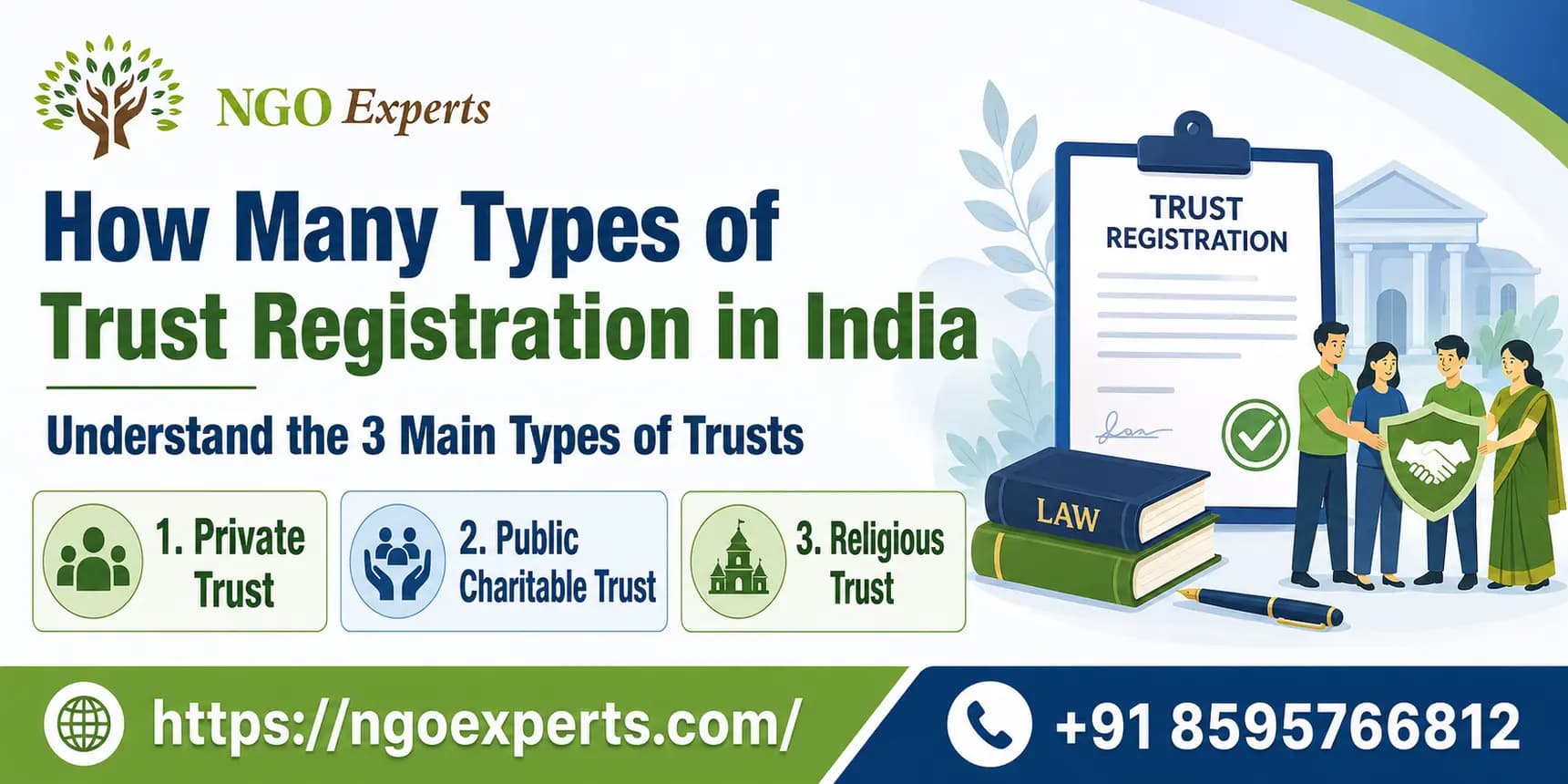
There are three main types of trust registration in India—public trust, private trust, and private-cum-public trust. Here are the detailed types of trust registration, explained with their purpose and scope:

types of trust registration

● Public Trust

A public trust is made for the public welfare & all its beneficiaries are the general public at large. Public trusts are created for charitable or religious purposes, such as the maintenance of temples, schools, hospitals, & other public facilities. These trusts are managed by a group of trustees who are appointed to serve the public interests. Public trusts are governed by the laws & regulations of the country where they are established, & they are subject to strict legal requirements regarding their funding & management.

● Private Trust

A private trust is set up for the benefit of specific individuals or groups. This type of trust typically  involves the transfer of one's assets to a trustee, who will then manage the assets for the benefit of the named beneficiaries. The beneficiaries may be immediate family members, friends, or even employees. The trustee has a duty to manage the trust assets in a responsible & prudent manner & to distribute them to the beneficiaries according to the terms of the trust agreement.

● Private cum Public Trusts

Private cum public trusts are a combination of both a private & a public trust. These trusts are established for philanthropic purposes, such as the welfare of a specific community or the promotion of a particular cause. The beneficiaries of a private-cum-public trust can be both private individuals & the general public. Private cum public trusts provide flexibility in terms of the management of trust property, & they are often used for social welfare projects, educational institutions, & public health programs.

Eligibility for Trust Registration

Eligibility for trust registration is determined by specific legal requirements that must be met to initiate the registration process. Trust registration is a legal process that involves the  creation of a trust entity that is recognized under the law. Fulfill the given eligibility criteria & get your trust registered now.

  • A minimum of two persons are required for trust formation
  • Trust formation must comply with the Indian Trusts Act, 1882.
  • Parties must not be disqualified under any Indian law.
  • Objectives of trust must align with Indian laws & regulations.
  • The trust formation must not harm public interest or violate any laws.
  • Trust activities must not cause harm to any individual.
  • Activities must adhere to the memorandum of the trust.
  • A deed must be professionally drafted & reflect the parties' interests.
  • Trust registration online requires strict compliance with legal requirements.
  • Trustees must act in the best interests of beneficiaries
  • The assets must be managed professionally & ethically. 

Process of Trust Registration certificate

The step-by-step trust registration process helps you establish your trust smoothly and legally. Here's a simplified breakdown of each stage from naming the trust to getting your trust registration certificate.

Step 1. Name of the Trust

The first step in registering a trust is deciding on a name for the trust. The name should be unique & not identical or confusingly similar to the name of any other registered trust or individual.

Step 2. Decide on Settlers/Trustees of the Trust.

According to the Indian Trusts Act, 1882, a trust must have a minimum of two trustees. The Settler should be a person who sets up the Trust, & the other Trustees should work for the goals & objectives of the Trust. Further, the authors are individuals who prepare the memorandum & trust deed of the trust.

The settlers, trustees, & authors must be individuals of sound mind, over the age of 18, & must not be disqualified from entering into a contract. For NGOs or charitable bodies considering other legal structures, society registration is also a viable option, offering flexibility in governance and operations.

Step 3. Form MOA for Trust

The Memorandum of Association (MOA) is a legal document containing the name of the Trust, its registered address, & the main objectives of the Trust. It must be drafted in duplicate.

Step 4. Draft the Trust Deed.

This is the heart of the trust registration process and must clearly define every operational and legal detail of the trust. 

Step 5. Submit the Trust Deed to the Registrar.

Once the MOA & Trust Deed have been drafted, they must be printed on non-judicial stamp paper of an adequate value, signed by the settler & trustees, & witnessed by two witnesses. The documents, along with the necessary affidavit, must be submitted to the Registrar of Trusts, along with the prescribed trust registration fees.

Step 6. Obtain Certificate of Trust Registration

Upon satisfactory scrutiny of the documents, the Registrar will register the Trust & issue a Trust Registration Certificate. The registration process usually takes around seven working days. Once completed, you can also download the trust registration certificate online using the registration number.


 Need Any Help?

Our experts team guide you to build your
dream through the registration process

Talk To Our Experts


Documents Required for Trust Registration

When it comes to registering a trust, several documents are necessary, & it is essential to make sure that each required document is readily available. These documents include:

  1. Identity Proof
  2. Address Proof
  3. No Objection Certificate
  4. Trust Deed Objective
  5. Trustee & Settlor Details
  6. Proper Stamp Value Trust Deed
  7. Trustee & Settlor Photos
  8. PAN Details

All documents are mandatory for a smooth and verified trust registration online check with the Registrar.

If you are finding it challenging to complete your trust registration despite filling out all the paperwork, NGOExperts is here to assist you. Our professionals will guide you with their industry knowledge and ensure a successful registration. Trust us to handle the process effortlessly & you can focus on achieving your goals with ease.

Why Choose NGOExperts?

We make your trust registration journey simple, fast, and compliant with all laws.

NGOExperts is a leading service provider for trust registration, DARPAN registration for trusts, and other related services for nonprofit organizations. Our team of experts is dedicated to providing seamless solutions to individuals & organizations looking to establish or operate a trust.

We pride ourselves on our commitment to excellence in facilitating trust deed registration, documentation, compliance, and personalized service to each client. With us, your trust registration certificate is not just a document; it’s your legal identity.

Contact us today for all your trust registration, DARPAN registration for trust, and other legal compliance needs.

Need Any Help ? Feel Free To Connect


Our expert team guide you to build your dream throug the registration process

Talk To Our Experts
cta image

Popular FAQ's on
Trust Registration

Service Detail

To obtain Trust registration, certain documents are required. The exact documents needed vary based on the type of organization applying for the certifications, but typically includes:

  • Trust Deed
  • Proof of Identity of Trustees (Aadhar, PAN, or Voter ID)
  • PAN Card
  • Proof of Registered Address of Trust (Ownership document or NOC)
  • PAN Card of the Trust
  • Photographs of Trustees

Ensuring that all necessary documents are provided and accurately completed is crucial for obtaining these certifications, which offer valuable tax benefits to eligible organizations.

Registering a Trust in India involves paying stamp duty for the Trust Deed, registration fees at the Sub-Registrar’s office, and any professional fees if you seek assistance from a lawyer or consultant. The overall cost varies based on the state and the services required, but the process typically includes drafting the Trust Deed, submitting required documents, and completing the registration formalities.

To get Trust registration, you need to draft a Trust Deed, choose trustees, and gather all required documents. Then, submit the Trust Deed for registration at the Sub-Registrar’s office. Once the process is completed, you'll receive the Trust Registration Certificate.Keep in mind that there are certain eligibility criteria and guidelines to follow for Trust registration and certification. As you navigate the process, be sure to seek guidance from a professional like us & stay organized in your documentation.

Anyone, including individuals, families, or organizations, can register a trust for charitable, religious, or social purposes, provided they are adults capable of entering into a legal contract.

The online Trust registration process typically takes around 7 to 15 days, depending on the state's procedures and document verification. The timeline may vary based on the complexity of the application and any additional requirements from the authorities.


No, GST registration is not mandatory for trust registration.

Once registered, a trust is valid indefinitely unless dissolved by its trustees.

The first step is to ensure that your trust is registered & actively carrying out charitable activities. Once that requirement is met, you can submit an application to the Income Tax Department to seek approval to be eligible for 80G.Typically, at least two trustees are required, though it may vary by state.

Yes, it is. A trust is considered a separate legal entity and as such, is subject to its own tax liability. However, registering for 12A exemption can provide certain tax benefits and should be considered by trusts seeking to maximize their tax efficiency. It's important to seek professional advice when it comes to taxation and trust registration to ensure that all obligations and opportunities are taken into account.

Subscribe Us For More Details
Email Address

I've had an outstanding experience with *NGO Experts* Their team is professional, responsive, and truly cares about delivering high-quality service. From start to finish, they exceeded my expectations with their attention to detail, clear communication, and commitment to customer satisfaction. I highly recommend *NGO Experts* to anyone looking for reliable and top-tier service. Definitely a company you can trust!!!

Vivek Anand Ji Shweta Chauhan

The team is incredibly quick, responsive, and truly supportive. They know exactly what they’re doing and guide you with clarity and confidence. Their professionalism, attention to detail, and ability to offer tailored solutions made the whole experience smooth and impactful. Highly recommended!

Vivek Anand Ji Akshit Goel

NGO Expert did an amazing job…well done ✔️ They finished our project on time with great transparency and fair pricing. Their knowledgeable team, especially SUDHA, was super cooperative and professional. Highly recommend them. Great work🫡

Vivek Anand Ji DURGESH KUMAR CHOUHAN

I had a great experience working with NGO Experts for registering my non-profit organization from outside India. From the beginning, they were approachable and professional. I explained my unique situation, and they guided me through the entire legal process with clarity and confidence.

Vivek Anand Ji Vishal Yadav

Extremely happy and satisfied by NGOexperts exceptional legal services for empowering NGOs in India. Highly recommend NGOexperts for seamless Section 8 certification and project report assistance.

Vivek Anand Ji Srijita Chatterjee

Professional and efficient team – made the entire NGO registration process seamless. Extremely knowledgeable and supportive throughout – highly recommended for NGO setup! Delivered more than expected – timely, reliable, and clear in communication

Vivek Anand Ji Parimala Narayanaswamy

Learnt through whatsapp; requested to support to get 12a. 80g, dharpan and CSR as well as Digital signature. Weldone NGO experts. Got all at reasonable cost that too not stepping out much from my city at far south in India. kUDOS to RITU and team.

Vivek Anand Ji Samrakshana Samaritan