
Planning to Raise CSR Funding? Choose the Right NGO Structure
A Section 8 Company can offer a structured framework for organisations seeking CSR partnerships and long-term institutional funding. If you're deciding between a Section 8 Company and a Trust, get professional guidance before registering.
Why Do Section 8 Companies and Trusts Matter for CSR Funding?
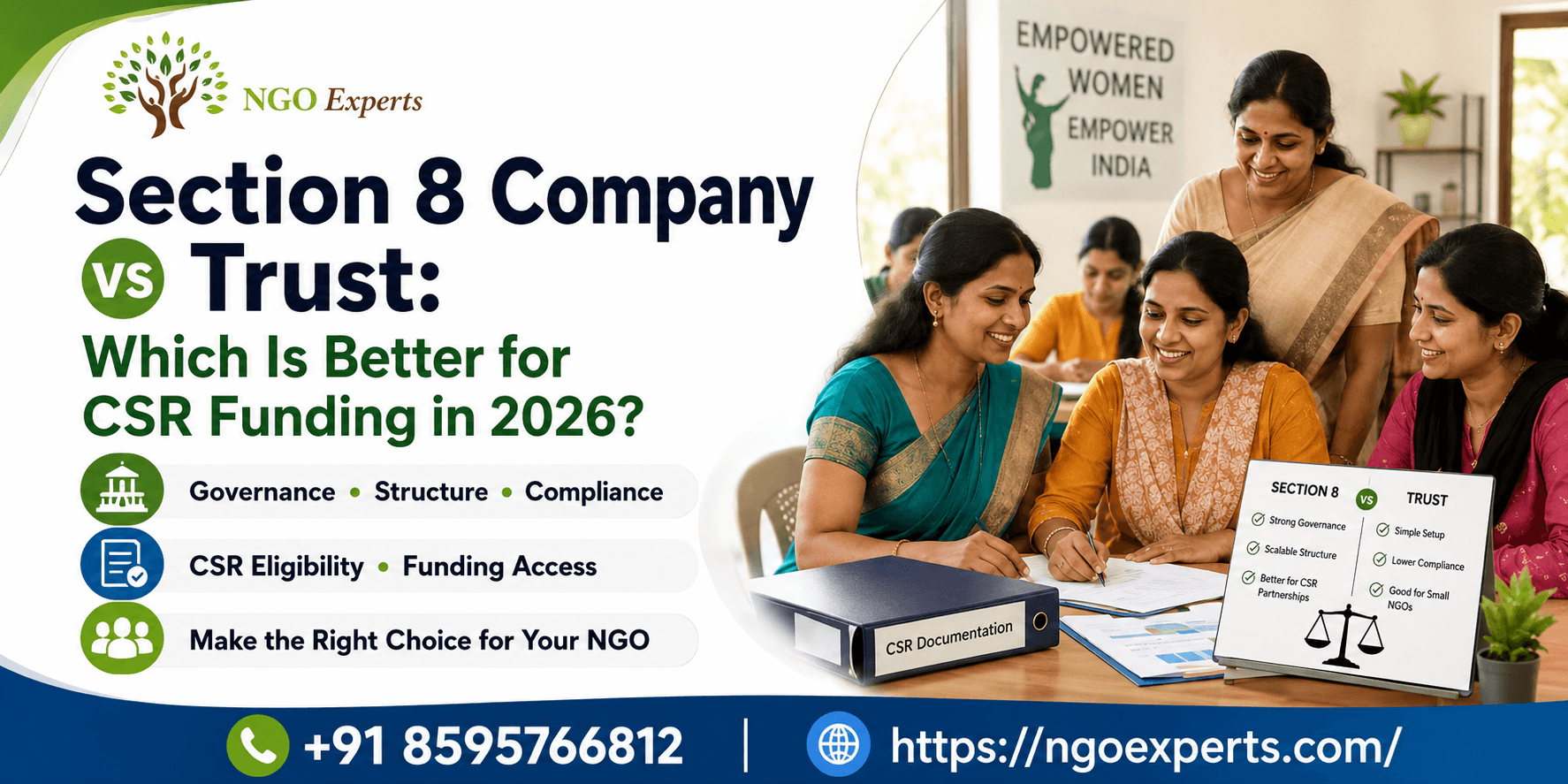
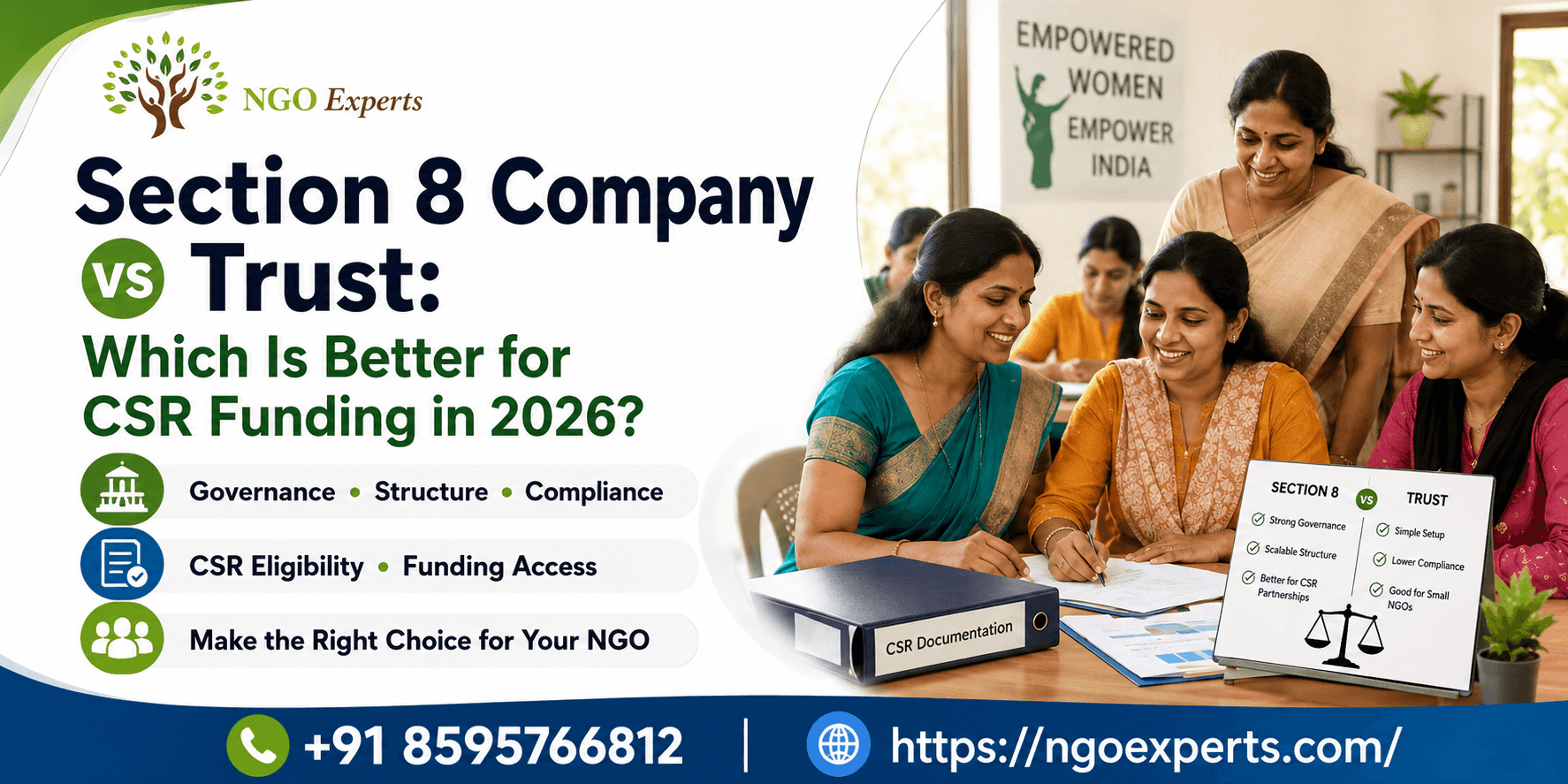
- Section 8 Company: A formal board structure, MCA filings, audited financial statements, and documented governance can streamline corporate due diligence.
- Trust: A Trust can also attract CSR funding when it has strong governance, proper accounts, valid registrations, and a proven record of impact.
- CSR-1 matters: Eligible implementing agencies generally need to have a valid CSR Registration Number (CSR-1) to undertake CSR activities on behalf of companies.
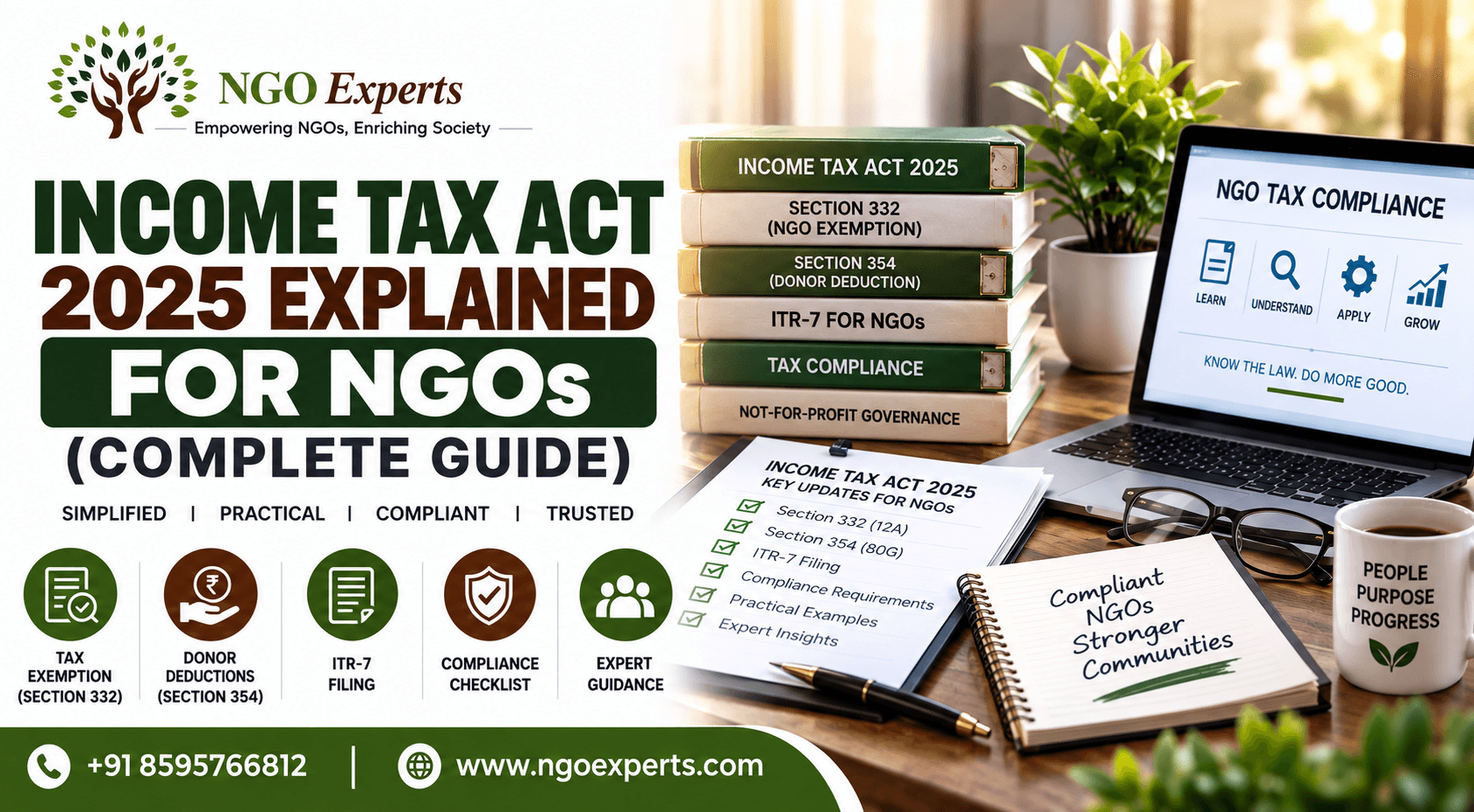
- 12A and 80G: Maintaining the applicable income-tax registrations helps establish tax and donation compliance.
- Transparency wins: Companies ultimately look beyond the legal structure. Clean financials, measurable impact, strong governance, and proper documentation can make an NGO more attractive to CSR partners.
What Law Governs CSR Funding in India?
- Net worth: ₹500 crore or more
- Turnover: ₹1,000 crore or more
- Net profit: ₹5 crore or more
Is a Section 8 Company Eligible for CSR Funding?
- Governance: managed by a Board of Directors, not individual trustees
- Compliance visibility: AOC-4, MGT-7, and ITR-7 filings are publicly searchable on the MCA portal
- Amendability: objects and governance rules can be updated more easily than a trust deed
- Perception: widely seen as the most institutionally credible of the three NGO registration structures
Is a Trust CSR Eligible for CSR Funding?
- Governance: managed by named trustees, with no mandatory board structure
- Compliance visibility: no MCA-style searchable annual return
- Amendability: a trust deed is difficult to change once executed
- Perception: strong for small, founder-led, community-based work; often needs a longer track record to match institutional trust
Ready to Set Up Your Section 8 Company?
Turn your non-profit idea into a legally registered organisation. NGOExperts can assist with documentation, incorporation and the Section 8 Company registration process.
How Do a Section 8 Company and a Trust Compare Side by Side?
| Point | Section 8 Company | Trust |
| Governance | Board of Directors | Trustees |
| Compliance load | Higher | Low to moderate |
| Public filing visibility | High (MCA portal) | Low |
| Best for | Large grants, institutional/national scale | Local, smaller CSR grants |
| Tax exemption route | Section 332 (12A) | Same |
| Donor deduction route | Section 354 (80G) | Same |
What Do CSR Teams Actually Check Before Funding?
- Valid RNPO/Section 332 :(12A) and Section 354 (80G) registration
- CSR-1 registration on the MCA portal: mandatory for any structure to receive CSR funds
- A clean annual filing history: missed AOC-4/MGT-7 filings, or an absent audit report for a Trust, are red flags
- A verifiable activity track record: real project reports and audited financials, not just a certificate
- Governance clarity: who's on the board or among the trustees, and how decisions get made
When Should You Choose Section 8 Company Registration for CSR Funding?
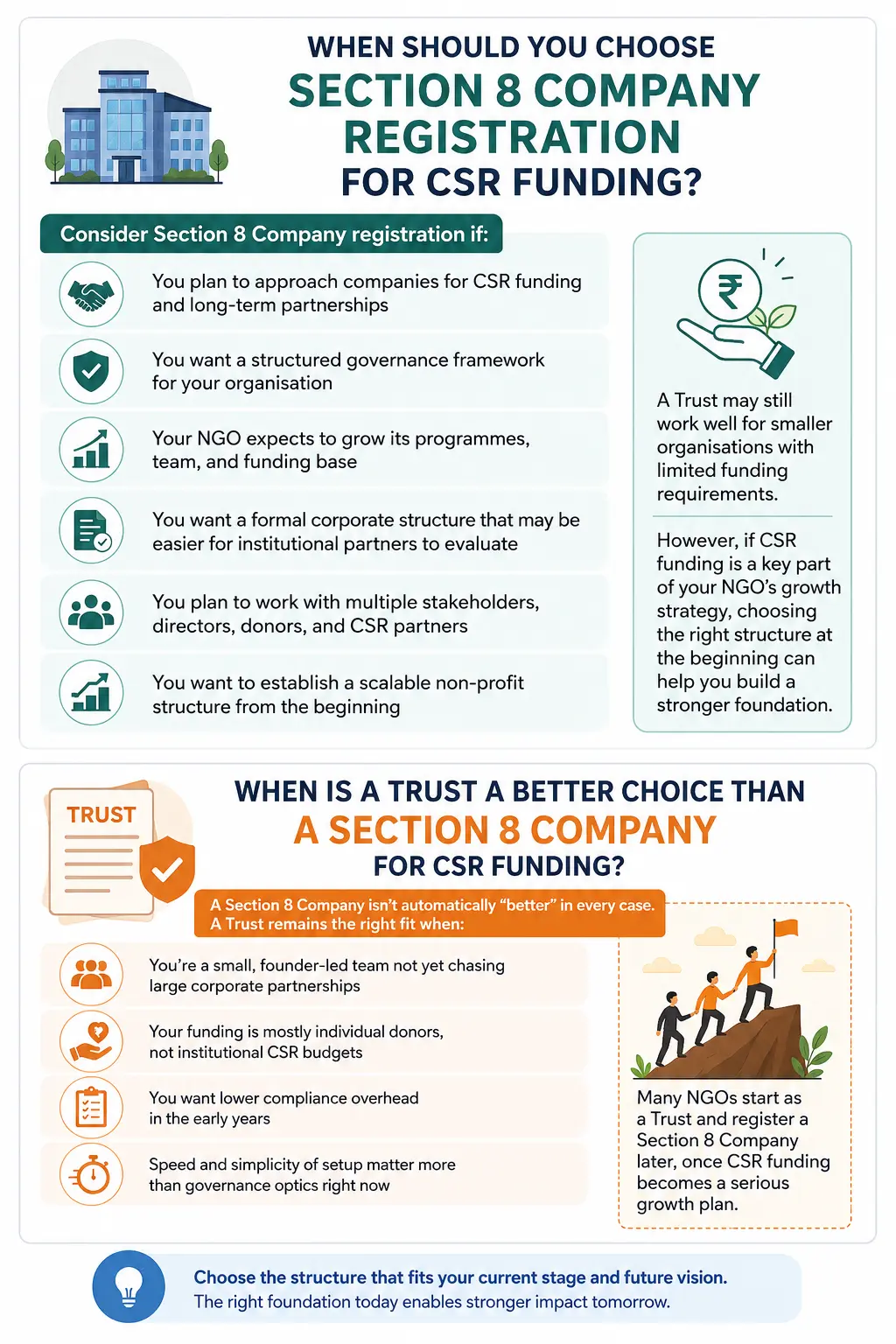
- You plan to approach companies for CSR funding and long-term partnerships
- You want a structured governance framework for your organisation
- Your NGO expects to grow its programmes, team, and funding base
- You want a formal corporate structure that may be easier for institutional partners to evaluate
- You plan to work with multiple stakeholders, directors, donors, and CSR partners
- You want to establish a scalable non-profit structure from the beginning
When Is a Trust a Better Choice Than a Section 8 Company for CSR funding?
- You're a small, founder-led team not yet chasing large corporate partnerships
- Your funding is mostly individual donors, not institutional CSR budgets
- You want lower compliance overhead in the early years
- Speed and simplicity of setup matter more than governance optics right now
How to Make Your NGO CSR-Ready: A Step-by-Step Guide
- Register your legal structure: Trust or Section 8 Company, based on your governance and funding plans.
- Apply for RNPO/Section 332 :(12A) as soon as your objects and records are ready.
- Apply for Section 354 (80G), usually alongside your 12A application.
- File CSR-1 on the MCA portal: mandatory before receiving any CSR funds.
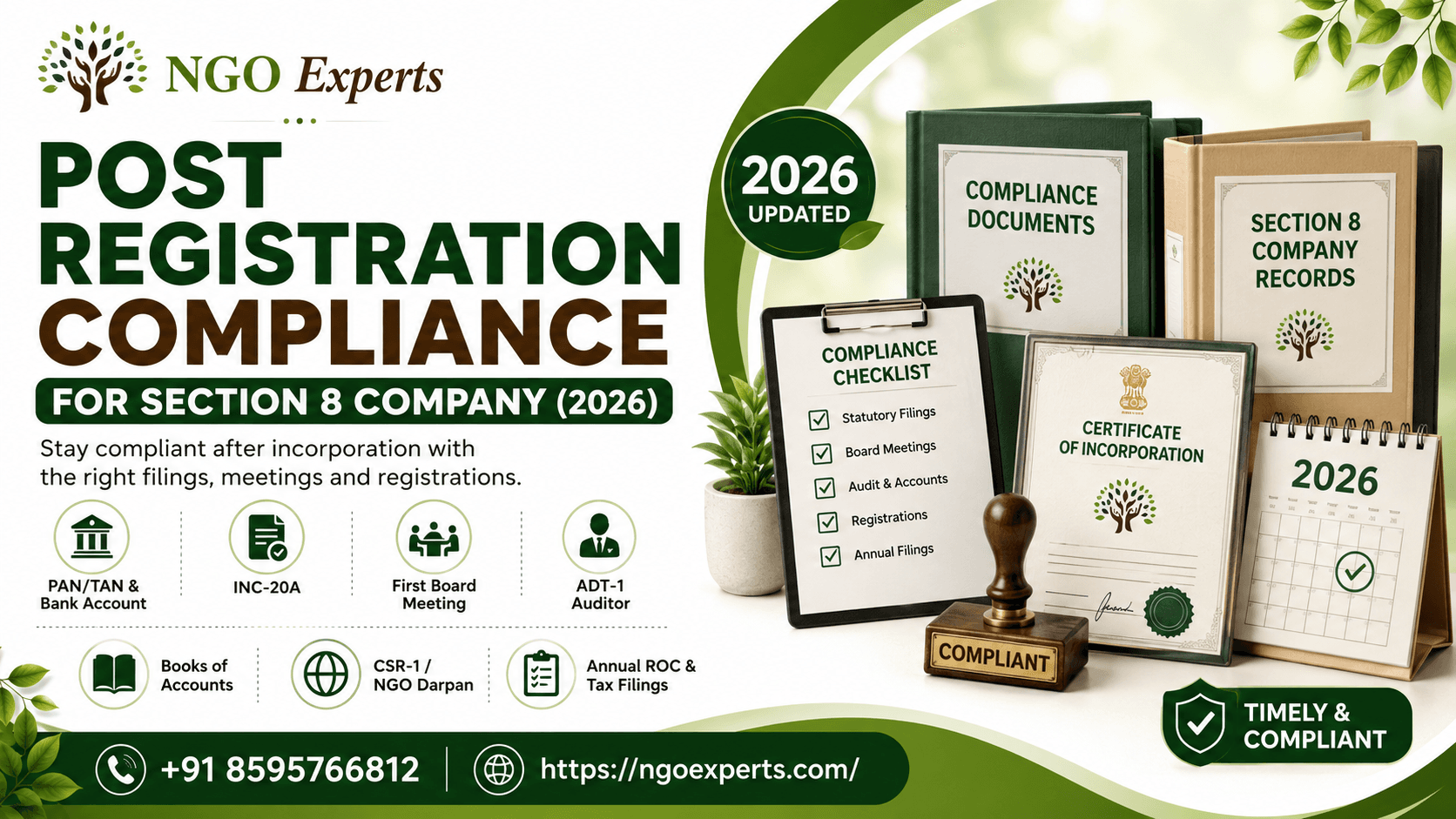
- Build a clean compliance record: timely filings for a company, audited accounts for a Trust.
- Prepare a fundable project report with clear objectives, budgets, and impact data.
Build a Strong Foundation for CSR Funding
Choosing the right legal structure is an important first step before approaching companies for CSR support. Set up your Section 8 Company with professional registration assistance from NGOExperts
Frequently Asked Questions
Can a Trust receive CSR funding in India?
Is a Section 8 Company always better than a Trust for CSR funding?
Do Section 8 Companies and Trusts get different tax benefits for donors?
What is CSR-1, and is it required for both structures?
Is there a CSR grant size where structure choice matters most?
Can a Trust convert into a Section 8 Company later?
How long does it take for a new NGO to become CSR-ready?
Do international grants also favor Section 8 Companies over Trusts?
Author
A Content Strategist at NGOExperts, who focuses on NGO registration, 12A and 80G registration, FCRA compliance, income tax filing for non-profits, and CSR funding guidelines in India. I research and write our compliance guides in collaboration with our in-house Chartered Accountants and Company Secretaries, so every article reflects current tax and regulatory requirements for the NGO and non-profit sector.
Written by Aabha Garg. Last updated on September 11, 2026