
Quick Summary
As NGO consultants with 3+years of experience helping thousands of social entrepreneurs, we understand the importance of trust registration in building credibility and securing long-term impact. Over the years, we’ve guided NGOs, community groups, and charitable institutions across India in setting up their trusts, societies, and Section 8 companies.
This blog is written with a focus on real experience, legal expertise, and practical guidance. If you are planning to register a trust in India, or wondering how to register a trust online, here you’ll find a clear explanation of the benefits, legal requirements, and step-by-step process – written in simple, user-friendly language.
What is a Trust in India?
A trust is a legal arrangement in which the founder (settlor) transfers property, money, or rights to trustees, who manage it for the benefit of others or for charitable purposes.
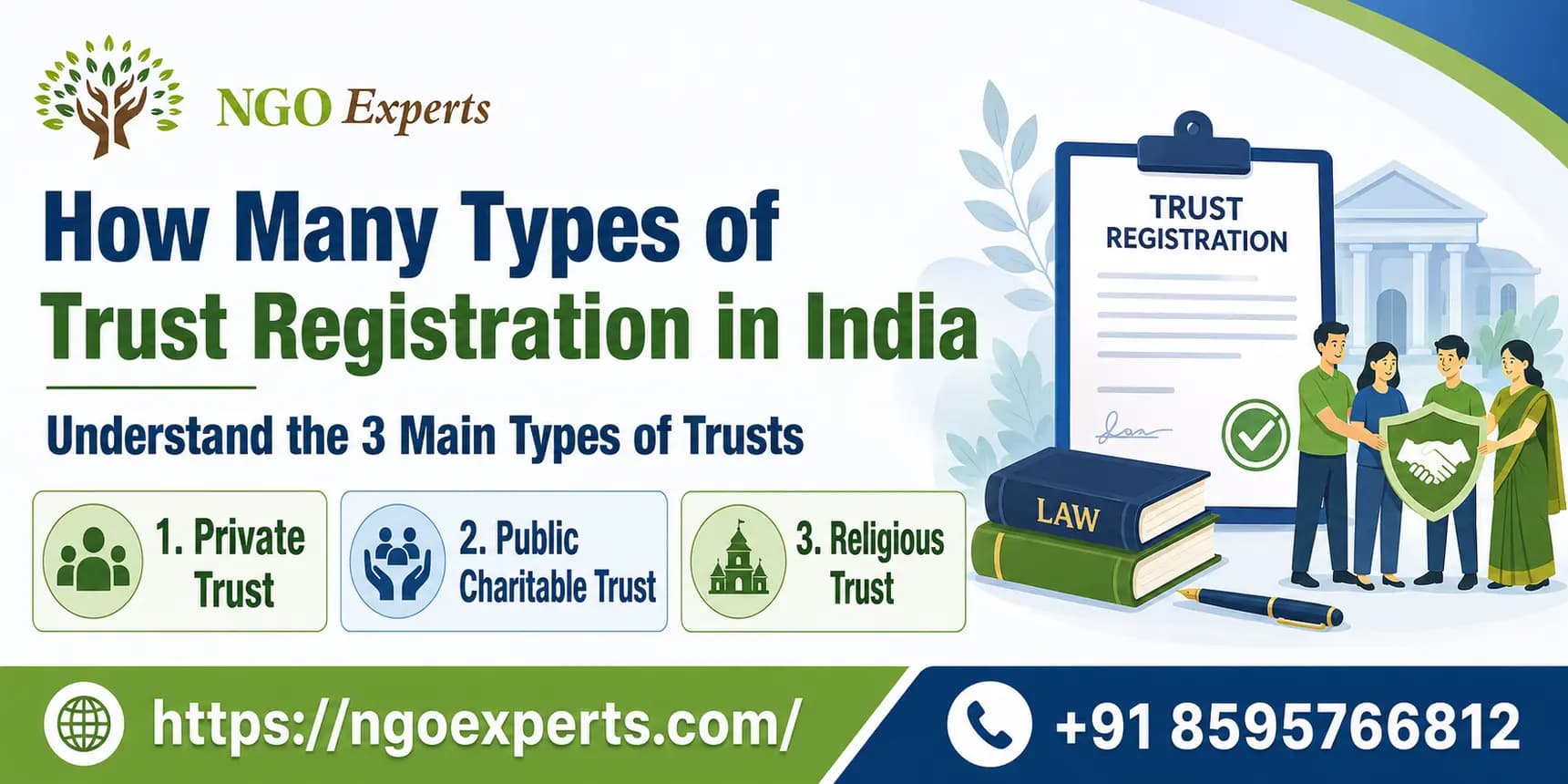
Private Trusts: Usually created for family or property-related benefits.
Public Charitable Trusts: Created for social, educational, or charitable activities.
Most NGOs in India register as public charitable trusts because it’s simple, affordable, and widely accepted.
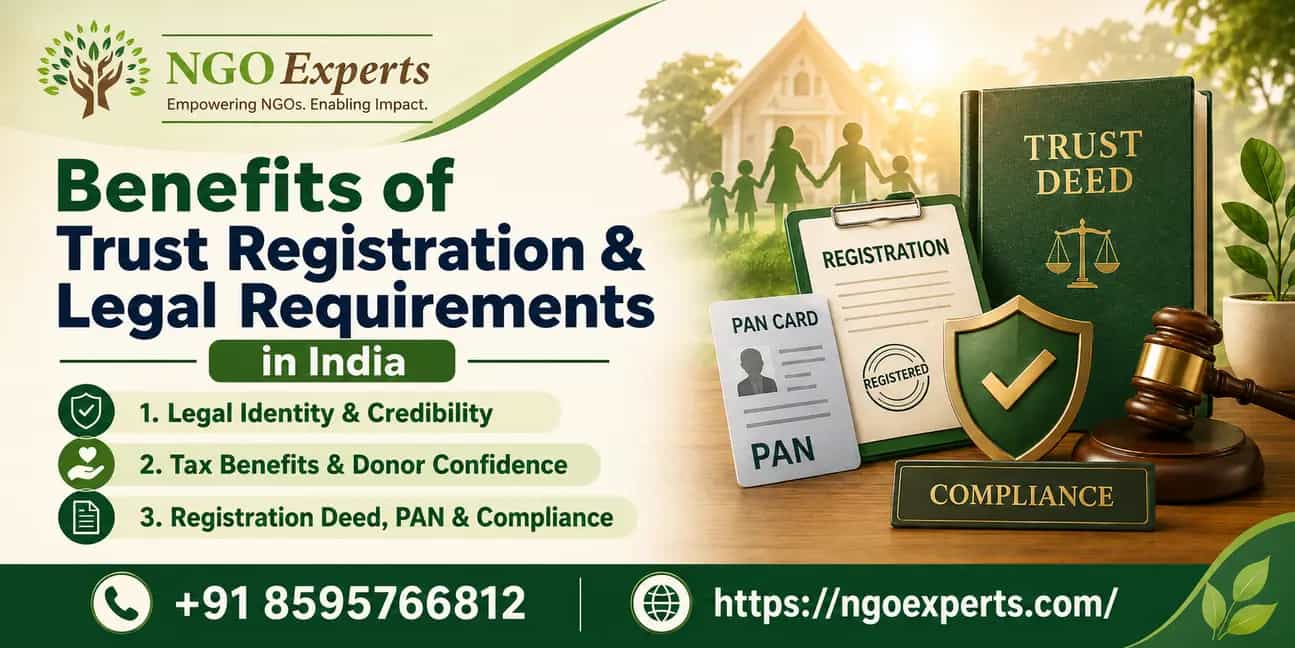
Benefits of Trust Registration in India
If you are serious about running an NGO or charitable project, trust deed registration brings many advantages:
1. Legal Recognition
A registered trust can open a bank account, own property, and enter into contracts in its own name. This ensures proper regulation and operation of trust activities.
2. Credibility with Donors
People and organizations prefer donating to a registered NGO because it ensures transparency and accountability. A registered trust is also eligible for CSR funding, government grants, and foreign donations.
3. Tax Exemptions
Once you get your trust registration under Section 12A and 80G of the Income Tax Act, the trust doesn’t pay income tax, and donors also get tax benefits.
4. Asset Protection
A charitable trust registration ensures that the assets and property are secured under the trust’s name and cannot be misused for personal gain.
5. Long-Term Stability
The Trust Deed defines rules and responsibilities, which ensure smooth governance and long-term stability even if trustees change.
6. Eligibility for CSR and FCRA
A registered trust can apply for CSR funds under the Companies Act, 2013, and for foreign contributions under the FCRA Act, 2010.
Legal Requirements for Trust Registration in India
If you are looking for a trust formation, you need to follow certain legal steps:
- Minimum Members: At least two trustees (in some states, three).
- Trust Deed: Main document that defines the objectives, rules, and management of the trust.
- Documents Needed:
- Trust Deed on stamp paper (value differs by state)
- ID and Address proof of settlor and trustees
- Passport-size photos
- Address proof of trust’s registered office
- Registrar of Trusts:To register a trust, make sure that the application is filed at the local Sub-Registrar's Office.
- Tax Registrations:To avail maximum tax benefits like exemptions or ease of incorporation, apply for PAN, 12A, and 80G for tax benefits.
Steps to Register a Trust in India
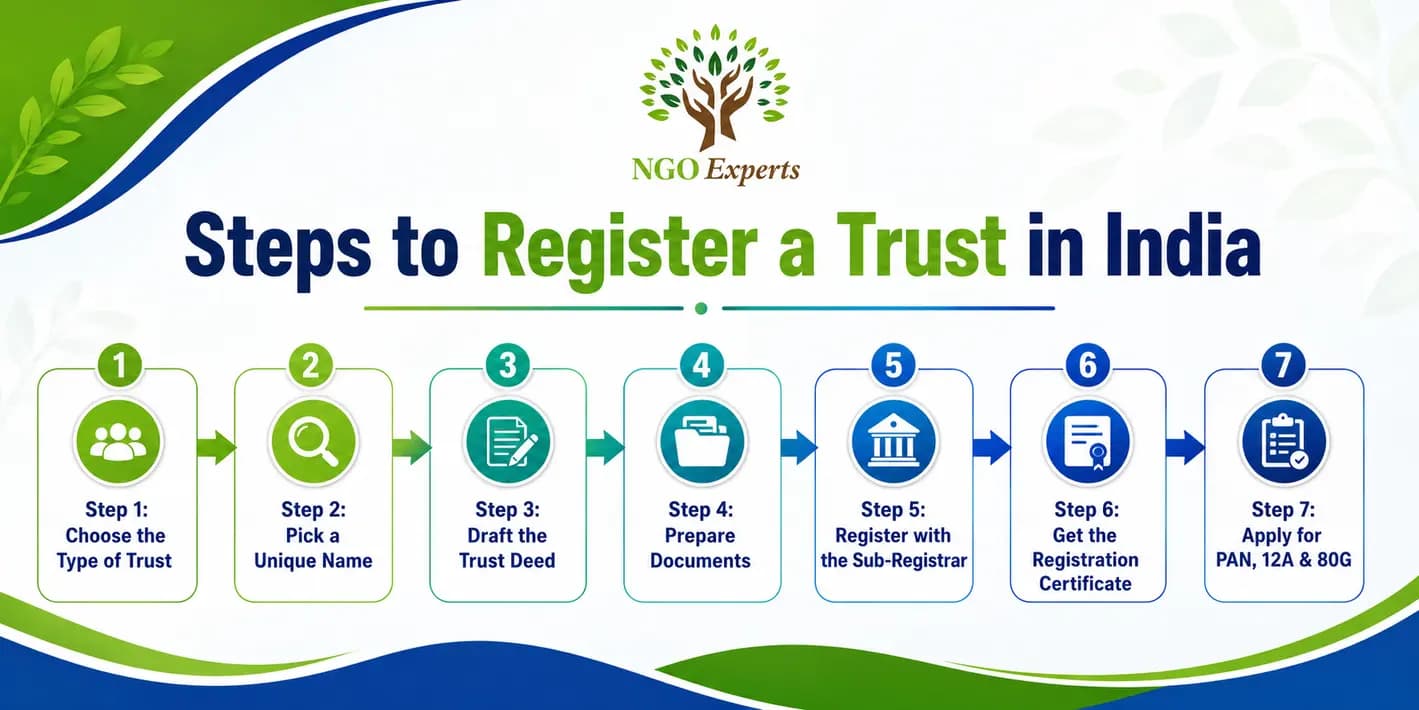
Many people think the trust registration process is complicated, but it’s actually simple if you follow the process correctly. Here’s a step-by-step guide:
Step 1: Choose the Type of Trust
Decide whether you want a private trust (for family/property) or a public charitable trust (for NGO/charity).
Step 2: Pick a Unique Name
Before getting started with your online trust registration, select a unique name for your trust that is not already in use by another NGO or trademark.
Step 3: Draft the Trust Deed
This is the most important step. The Trust Deed should include:
- Name and address of the trust
- Objectives and purpose of the trust
- Details of trustees and settlor
- Rules for management and succession
Step 4: Prepare Documents
To ensure a smooth and accurate process, the following documents are required for trust registration :
- ID & Address proof of settlor and trustees
- Passport photos
- Registered office proof (rent agreement, NOC, or utility bill)
Step 5: Register with the Sub-Registrar
The settlor and two witnesses must carry all the documents while visiting the Sub-Registrar's Office to sign and submit the Trust Deed.
Step 6: Get the Registration Certificate
After verification, the Registrar issues a Trust Registration Certificate.
Step 7: Apply for PAN, 12A & 80G
Once registered, apply for a PAN card and tax registrations so your trust can claim exemptions and attract donations.
Pro Tip: Always consult a professional NGO registration consultant for hassle-free and secure registration.
Registered Trust vs. Unregistered Trust
| Feature | Registered Trust | Unregistered Trust |
| Legal Identity | Yes | No |
| Tax Benefits (12A/80G) | Available | Not Available |
| Credibility for Donors | High | Low |
| Asset Protection | Strong | Weak |
| CSR/FCRA Eligibility | Eligible | Not Eligible |
Final Thoughts
If you’re planning to start an NGO, Trust Registration is the first step towards credibility and impact. From legal recognition to tax exemptions and funding opportunities, it gives your social initiative the strong foundation it needs.
Frequently Asked Questions
Is trust registration compulsory in India?
No, but without registration, you can’t get tax exemptions, CSR funds, or legal recognition.
How long does it take to register a trust?
Usually 10–20 working days, depending on the state.
Can a family register a private trust?
Yes, families often create private trusts for property or inheritance purposes.
Which is better: Trust, Society, or Section 8 Company?
A Trust is easy and quick, a Society has democratic management, while a Section 8 Company is most credible but has stricter compliance.
Do trusts qualify for CSR funding?
Yes, provided they are registered and comply with the Companies Act, 2013.
What are the four types of trust?
In India, trusts are broadly categorized into 4 main types: living trusts, testamentary trusts, revocable trusts, and irrevocable trusts.
Who can be eligible for a trust registration in India?
To be eligible for trust registration in India, at least two individuals are required to establish it through a voluntary act (the settlor), who will then appoint trustees to manage the trust property for beneficiaries, all under a legal trust deed.
How much does trust registration cost?
Trust registration fees usually include Stamp Duty and the Government Registration Fee. Stamp Duty is based on the state and the value of the trust’s assets, and can range from 1–4% or about ₹100 to ₹2,000 (sometimes more). The Government Registration Fee, paid to the sub-registrar, also varies by state and is typically between ₹100 and ₹5,000 or higher.
Author
Sakshi Kashyap
I am a dedicated and detail-oriented Website Content Writer with over two years of experience in creating compelling, reader-friendly, and SEO-optimized content. My expertise lies in developing well-structured web pages, landing pages, blogs, and service descriptions that enhance user engagement and drive organic traffic.
Written by Sakshi Kashyap. Last updated on June 3, 2026