
Quick Summary
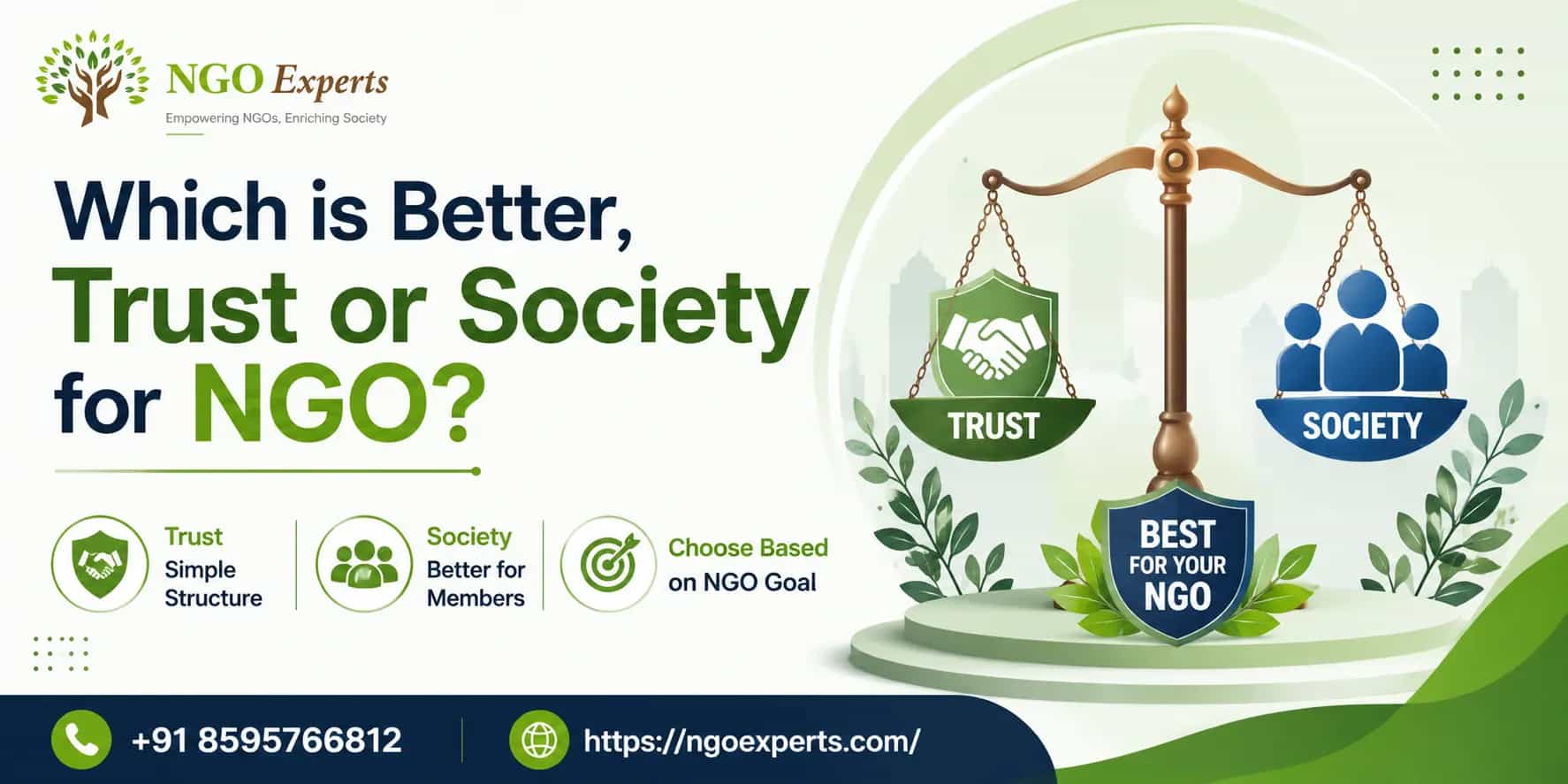
When you're starting a non-profit organization in India, choosing the right legal structure is important because it affects how you'll run your organization and achieve your goals. The two most common options are Trust and Society, each with its own features and benefits. Trusts are simpler and faster to register (10-15 days), need just 2 people, and give permanent control to trustees, making them ideal for small, focused charitable work.
Societies take longer to register (30-45 days), require 7 members, and work through elected committees, making them better for community-driven projects where multiple people share decision-making. Choose based on your team size, how you want to make decisions, and whether you prefer simplicity (trust) or democracy (society).
Overview
Many individuals and groups wish to establish a legal entity that can operate in the social sector and contribute to society. Trusts and societies are the major social entities that can be set up for a variety of reasons, including charitable purposes, estate planning, and asset protection. It's important to note that the legal requirements and registration process for trusts can vary widely depending on the country or state in which the trust is established. On the other hand, a Society is more democratic in nature and is governed by a Managing Committee, which is elected by its members.
However, choosing the right legal form, a Trust or Society, can be confusing as each structure has its unique benefits, legal frameworks, costs, and governance styles. Whether you are an individual or a group aspiring to make a positive impact in society, this blog post not only helps you understand the basic difference between a trust and a society but also highlights the necessity of NGO registration toward establishing a legally recognized entity.
Understanding Trusts and Societies
What is a Trust?
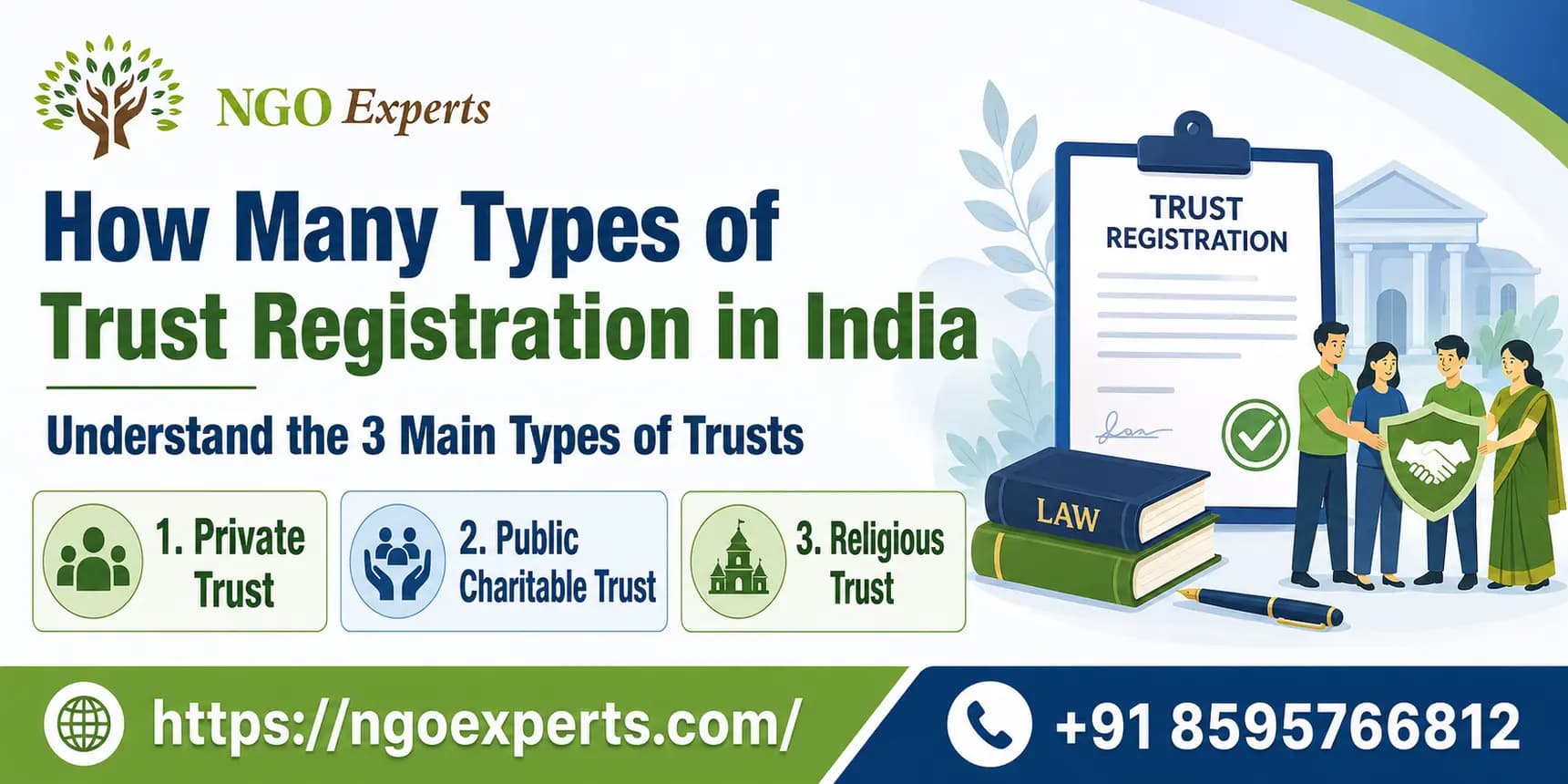
A Trust is an arrangement where property or assets are held by trustees for the benefit of beneficiaries. Governed by the Indian Trusts Act, 1882, it is ideal for NGOs focused on charities like hospitals, education, or relief work. Trusts are managed by trustees according to a trust deed and typically require at least two trustees.
To set up a trust, the founder(s) must create a trust deed that outlines the terms and conditions of the trust, including the purpose of the trust, the assets that will be held in trust, and the identity of the trustee(s) and beneficiary (ies). The founder(s) may also need to register the trust with the relevant regulatory authority, depending on the jurisdiction.
It's important to note that the legal requirements and registration process for trusts can vary widely depending on the country or state in which the trust is established. It's recommended to seek professional legal advice before setting up a trust to ensure that all legal and regulatory requirements are met.
What is a Society?
A Society is a group of individuals voluntarily coming together to promote literature, science, arts, or social welfare. Registered under the Societies Registration Act, 1860, societies usually have at least seven members and are run democratically by members through constitutions and bylaws.
The process of registering a Society is slightly more complex than that of a trust, as it requires a minimum of seven members to come together and draft a Memorandum of Association (MoA) and Rules and Regulations. Once the Society is registered, it can apply for various tax exemptions and benefits under the Income Tax Act, such as 80G and 12A exemptions.
It can also apply for grants and funding from various government and non-governmental organizations for its social welfare activities. However, it is important to note that a Society is required to file annual returns with the Registrar of Societies and maintain proper accounts of its income and expenditure, failing which its registration may be cancelled.
Key Differences Between Trust and Society
| Parameter | Trust | Society |
| Legislation | Indian Trusts Act, 1882 | Societies Registration Act, 1860 |
| Registration Authority | Sub-Registrar or Charity Commissioner | Registrar of Societies |
| Members Required | Minimum 2 trustees | Minimum 7 members |
| Management | Trustees hold decision-making power | Run by the Managing Committee elected by members |
| Registration Time | Typically 7-15 days | Around 30-45 days |
| Cost | Lower registration and compliance costs | Slightly higher costs due to formalities |
| Transparency | Moderate - fewer regulatory disclosures | Higher transparency due to democratic governance |
| Property Ownership | Owned by trustees on behalf of beneficiaries | Owned by society as an entity |
| Decision Making | Centralized by trustees | Democratic, collective decision-making |
| Change of Board Members | As per the trust deed provisions | As per society rules and resolutions |
Quick Tips When Choosing Between Trust and Society
- If your NGO will have a small founding team and manage assets primarily, a Trust might be efficient.
- If you want participative decision-making and expect multiple members involved, Society is preferable.
- Consider operational scale: societies generally suit wider community outreach.
- Factor in funding: Some government grants prefer societies due to transparency.
Checklist to Register Your NGO as a Trust or Society
For Trust
- Minimum 2 trustees are required with valid ID and address proof
- Submit the Trust deed
- Registered office address proof
- Stamp duty payment as per state regulations
- Submit documents at the Sub-Registrar's office or the Charity Commissioner
For Society
- Minimum 7 members with a consent form and ID proofs
- Memorandum of Association (MOA) and Rules & Regulations drafted
- Registered office address proof
- Pay registration fees and stamp duty
- Apply with all documents to the Registrar of Societies
Frequently Asked Questions
Which is faster to register, Trust or Society?
Trust registration typically completes faster (7-15 days) compared to Society registration, which can take 30-45 days.
Can I convert my Trust into a Society later?
No, these are distinct legal entities, and conversion requires dissolution of the earlier and fresh registration of the new.
Which structure is better for receiving government grants?
Societies are generally preferred as they have transparent governance and member-based decision-making.
Is government filing annual returns necessary for Trusts and Societies?
Societies must file annual returns with the Registrar. Trusts typically have fewer filing requirements but may need annual audits.
Can foreign nationals be members of a Trust or Society?
Foreign nationals can be trustees or members, but restrictions apply depending on FCRA norms.
Author
Srijita Chatterjee
I am a Content Specialist holding a Master’s degree and with over 5 years of experience in the creative arena. I specialize in breaking down complex concepts into clear, understandable insights that help my viewers deeply engage and retain. Known for my approachable and engaging style, I am committed to providing accurate, trustworthy information that empowers individuals and organizations to make informed decisions and achieve their goals.
Written by Srijita Chatterjee. Last updated on June 2, 2026