
Ready to Apply for 12A and 80G Registration?
Complete your 12A and 80G registration application with expert guidance. Get help with documentation, form filing, verification, and application tracking.
What Are 12A and 80G?
- 12A: Benefits the NGO by providing tax exemption on eligible income.
- 80G: Benefits eligible donors by allowing them to claim a deduction for qualifying donations.
Who Can Apply for 12A and 80G?
- A Trust Deed, if you're registered as a Public Charitable Trust
- A Society registration certificate, if you're registered under the Societies Registration Act, 1860 (or the relevant state law)
- A Certificate of Incorporation, if you're registered as a Section 8 Company
What Documents Do You Need Before You Apply for 12A and 80G Registration?
- PAN of the NGO, in the organisation's own name, not a trustee's or director's personal PAN
- Registration certificate: Trust Deed, Society certificate, or Certificate of Incorporation
- MOA/AOA, Trust Deed, or Society Rules, with clearly written charitable objects
- Details of trustees, members, or directors, including their PAN and address
- Audited financial statements and bank statements for recent years, if you're applying for regular registration
- An activity report: real project details, locations, and the number of people you've actually helped
- Digital Signature Certificate (DSC) of an authorized signatory, for filing on the portal
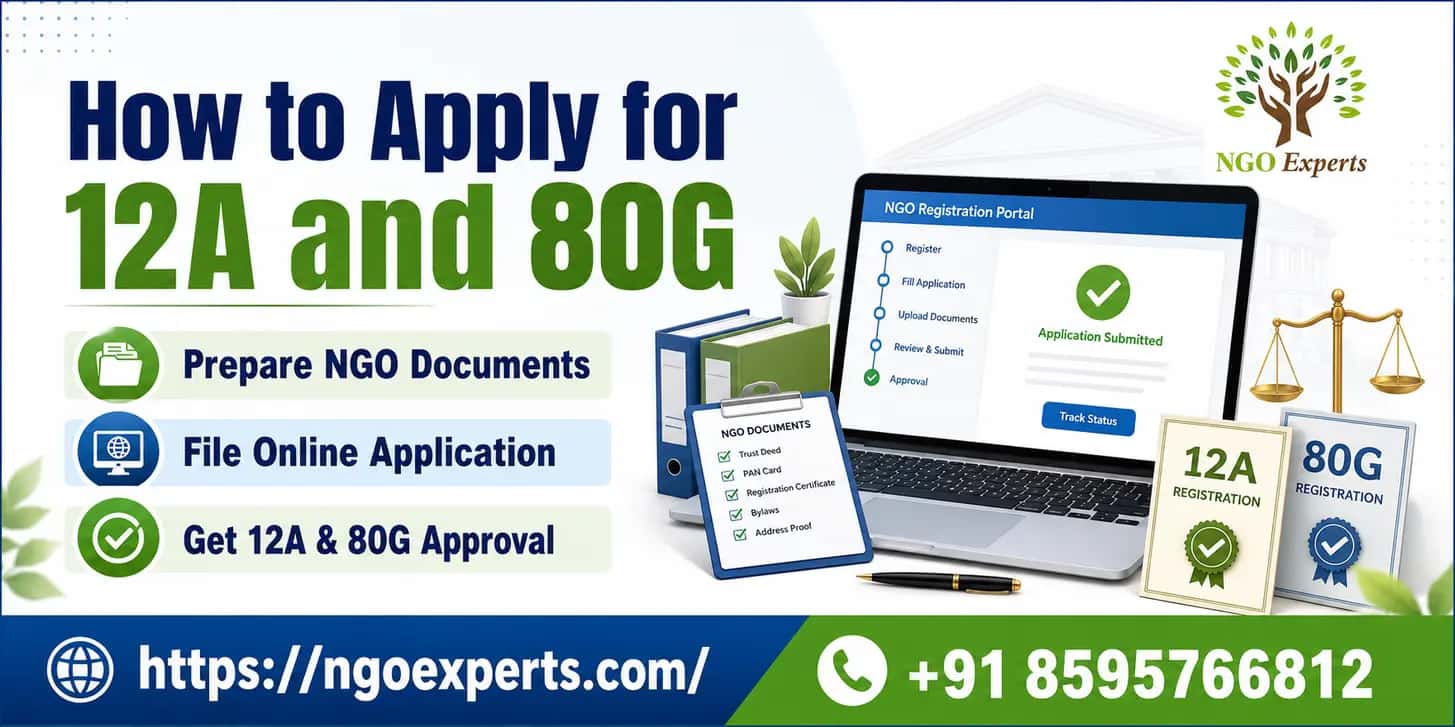
How to Apply for 12A and 80G: Step-by-Step Process

- Form 104 for provisional registration.
- Form 105 for regular registration, renewal, or conversion from provisional to regular registration.
Need Help with Your 12A and 80G Application?
Avoid mistakes and delays in the registration process. Our experts can help your NGO prepare documents and complete the application correctly.
Should You Apply for Provisional or Regular Registration?
- Apply for provisional registration (Form 104) if your NGO is brand new and hasn't started activities yet, or has very limited activity history. Provisional registration lasts 3 years and gives you time to build a track record.
- Apply for regular registration (Form 105) if your NGO already has activity records, audited financials, and a genuine operating history. Regular registration lasts 5 years (or 10 years if your annual income is ₹5 crore or below).
What Happens After You Submit the Application?
- The Principal Commissioner or Commissioner of Income Tax examines your documents and objects
- They may call for additional information or clarification, especially around your activities or financial records
- If satisfied, they issue an order (Form 106 for provisional, Form 107 for regular) granting your registration
- If not satisfied, they can reject the application, with reasons recorded, through Form 107
How Long Does Approval Take?
| Stage | Typical Timeline |
| Application review after submission | A few weeks to a few months |
| Departmental query response window | Varies, but respond promptly |
| Provisional registration validity | 3 years |
| Regular registration validity | 5 years (10 years if income ≤ ₹5 crore) |
| 80G approval validity | 5 years, regardless of income |
Mistakes That Slow Down or Reject Your Application
- PAN registered in a trustee's or director's name, instead of the NGO's own name
- A vague objects clause, like "welfare of society," instead of specific, named activities
- Missing or unsigned documents, such as an incomplete Trust Deed or MOA
- Applying for 80G before 12A is secured, when 80G approval typically depends on valid 12A status first
- Weak or missing activity evidence, for NGOs applying for regular registration
- Not responding promptly to a departmental query, which can delay or derail an otherwise strong application
Start Your 12A and 80G Registration Today
Get professional assistance from application preparation to submission and follow-up with the Income Tax Department.
Frequently Asked Questions
What is the first step to apply for 12A and 80G?
Can I apply for 12A and 80G at the same time?
Which form should a new NGO use to apply?
Do I need a Digital Signature Certificate to apply?
How long does it take to get 12A and 80G approval?
Can a Trust, Society, and Section 8 Company all use the same application process?
What happens if my application is rejected?
Is there a government fee to apply for 12A and 80G?
Author
A Content Strategist at NGOExperts, who focuses on NGO registration, 12A and 80G registration, FCRA compliance, income tax filing for non-profits, and CSR funding guidelines in India. I research and write our compliance guides in collaboration with our in-house Chartered Accountants and Company Secretaries, so every article reflects current tax and regulatory requirements for the NGO and non-profit sector.
Written by Aabha Garg. Last updated on September 8, 2026