
Quick Summary
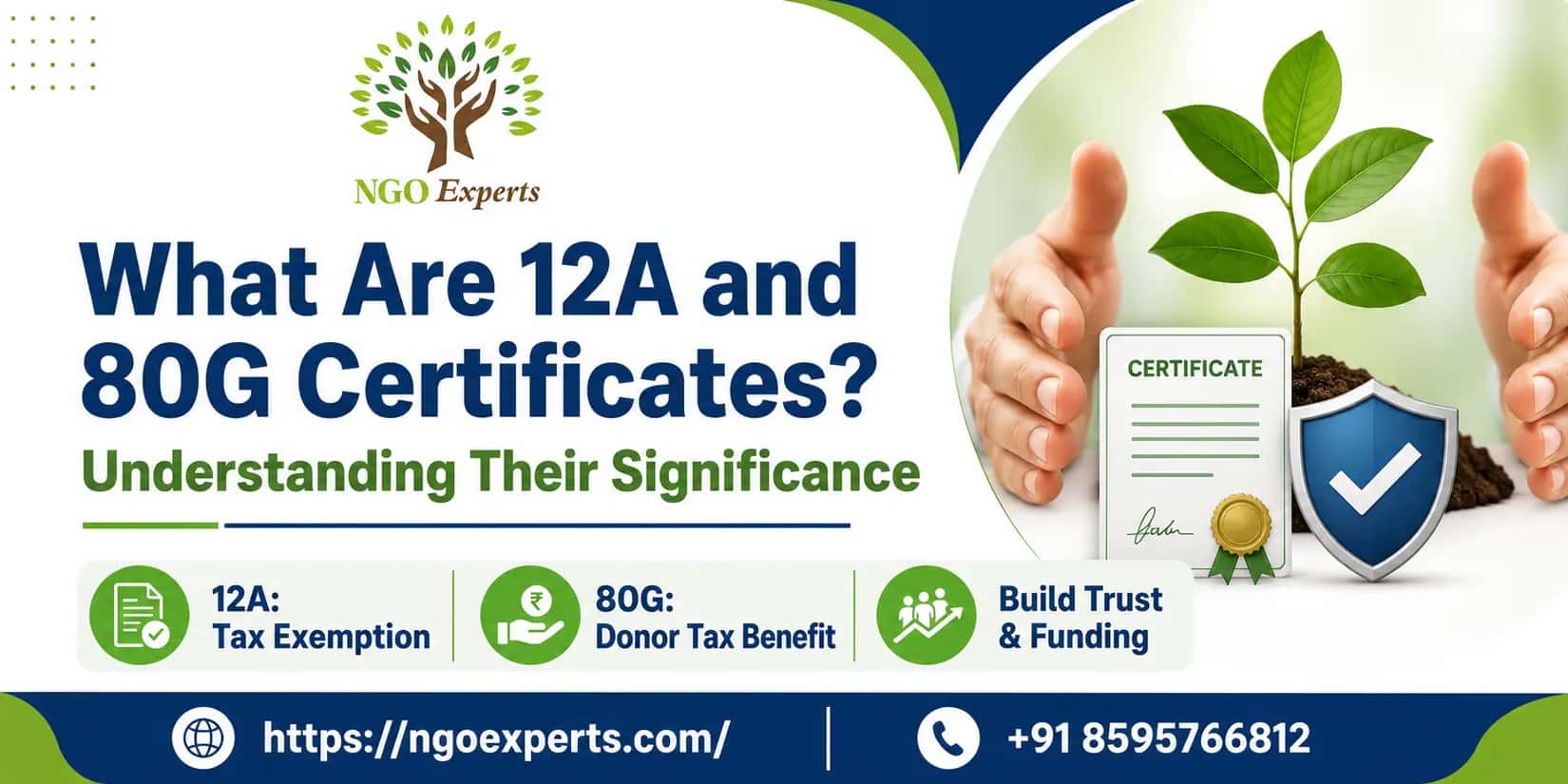
In the realm of nonprofit organizations in India, 12A and 80G certificates play a pivotal role. These certifications not only enhance the credibility of an NGO but also provide substantial tax benefits. Understanding the meaning of 12A and 80G certificates is essential for any organisation aiming to operate efficiently and attract donors. This article delves into what these certificates are, their benefits, and the process of obtaining them.
What Are 12A and 80G Certificates?
12A and 80G certificates are provisions under the Indian Income Tax Act that grant tax exemptions and benefits to non-profit organizations. These certificates are crucial for NGOs, charities and other similar entities to operate smoothly and maximise their fundraising efforts.
What does a 12A Certificate?
If you want to know what a 12A certificate is, let's explain it. It is granted to an organization that seeks to be recognized as a charitable entity under the Income Tax Act. This certification allows the organization to receive tax-exempt donations and ensures that income derived from its activities is exempt from taxation, provided it adheres to the government's guidelines.
What Is an 80G Certificate?
The 80G certificate complements the 12A certificate by enabling donors to claim tax deductions on their contributions to the organisation. The 80G Certificate meaning is to encourage more donations, as donors can reduce their taxable income by a certain percentage of their contribution, making charitable giving more attractive.
Importance of 12A and 80G certificates
Understanding the significance of 12A and 80G certificates is vital because they build credibility and trustworthiness. These certificates not only provide financial benefits but also make your organization appear more reliable to donors and partners. Here's why they matter to you:
1. Tax Exemptions for NGOs
Once you get to know the 12A meaning and the 80G certificate meaning, let's understand the tax exemption they offer. With a 12A certificate, an NGO can ensure that its income is not subject to income tax, provided it uses the funds for its charitable activities. This exemption allows the organisation to allocate more resources towards its mission rather than paying taxes.
2. Increased Donor Trust
Holding 12A and 80G certificates significantly boosts an NGO’s credibility. Donors are more likely to contribute to an organisation that is officially recognised and offers tax benefits. The 80G certificate, in particular, provides donors with the assurance that their contributions are legitimate and can be deducted from their taxable income.
3. Enhanced Fundraising Opportunities
By combining 12A and 80G certificates, NGOs can attract more donors. The tax benefits associated with these certificates make donations more appealing, thereby increasing the overall fundraising potential. This increased funding can be pivotal in expanding the organisation’s programs and initiatives.
4. Compliance with Legal Requirements
Obtaining 12A and 80G certificates ensures that an organisation complies with the legal requirements set by the Indian government. This compliance not only avoids potential legal issues but also reinforces the organisation’s commitment to transparency and accountability.
Difference between 12A & 80G Certificates
Section 12A certificate meaning for the organisation. It gives tax exemption on income earned by NGOs, trusts, and Section 8 companies from charitable activities.Section 80G certificate meaning for the donor. It allows individuals and companies to claim tax deductions on donations made to registered charitable organisations.
| Basis | 12A | 80G |
| Main purpose | Income tax exemption for the NGO | Tax deduction benefit for the donor |
| Who benefits | NGO / trust / Section 8 company | Donor |
| Tax impact | NGO’s charitable income is not taxed | A donor can reduce taxable income |
| Importance | Essential for tax-efficient operations | Useful for attracting donations |
| Nature | Core registration for nonprofit tax relief | Additional registration for fundraising appeal |
12A is for the NGO's tax exemption, while 80G is for the donor's tax benefit.This distinction matters because many NGOs need both registrations to improve compliance, credibility, and fundraising potential.
How to Apply for 12A and 80G Certificates?
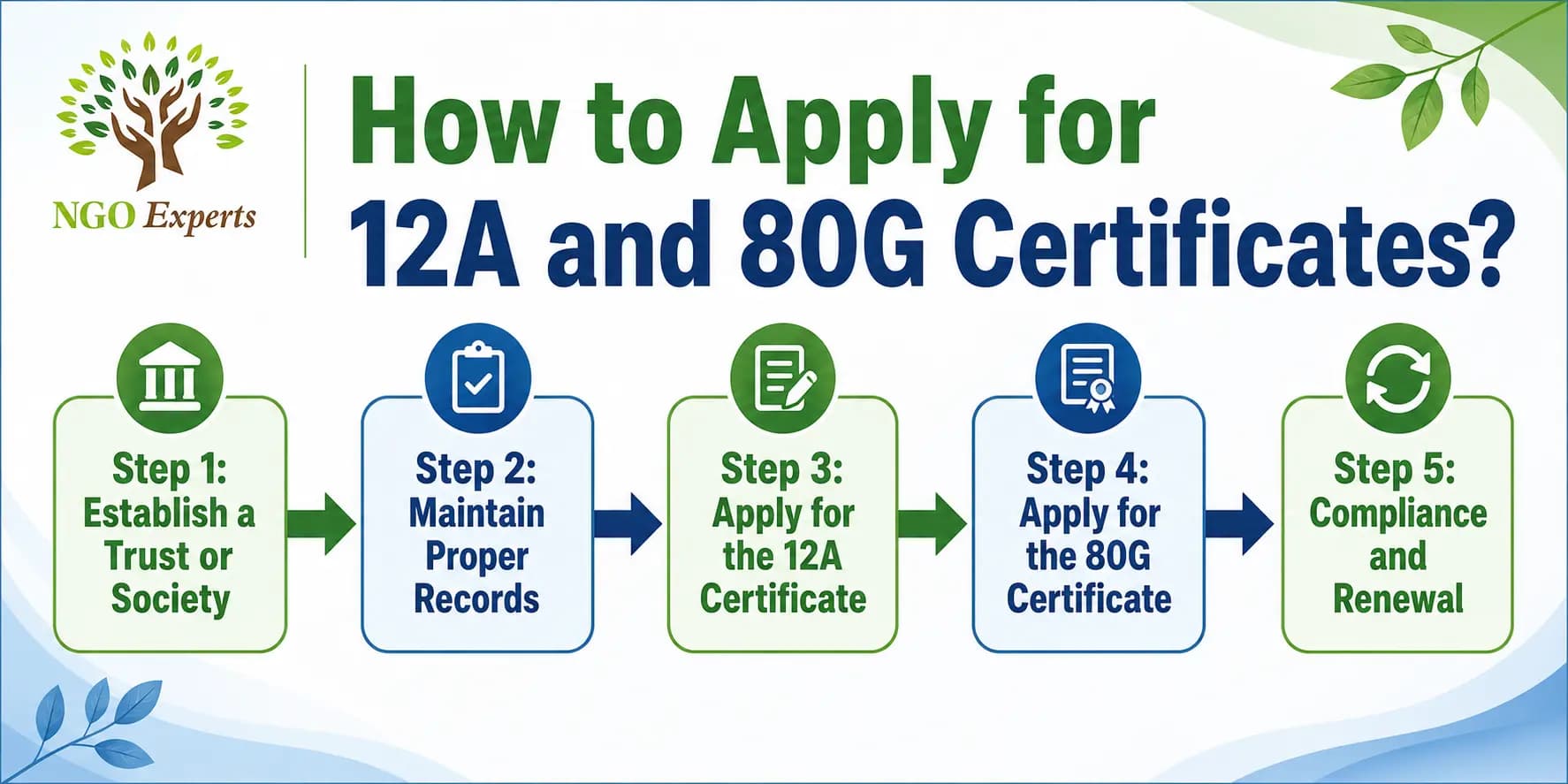
Securing 12A and 80G certificates involves a structured application process. Here’s a step-by-step guide to help organisations navigate the process:
Step 1: Establish a Trust or Society
Before applying for the certificates, an organisation must be registered as a trust, society, or a Section 8 company. This registration is a prerequisite for obtaining 12A and 80G certificates.
Step 2: Maintain Proper Records
Maintaining detailed financial records and documentation of activities is crucial. The organisation must demonstrate that it operates exclusively for charitable purposes and complies with the Income Tax Act guidelines.
Step 3: Apply for the 12A Certificate
To obtain the 12A certificate, the organisation must submit Form 10A along with the required documents to the Commissioner of Income Tax (Exemption). This includes the organisation’s registration details, financial statements, and a detailed account of its activities.
Step 4: Apply for the 80G Certificate
After obtaining the 12A certificate, the organisation can apply for the 80G certificate by submitting Form 10G. This application requires additional documentation, including the organisation’s financial statements and proof of its charitable activities.
Step 5: Compliance and Renewal
Once granted, the 12A and 80G certificates must be renewed periodically. Organisations must ensure ongoing compliance with the Income Tax Act by maintaining transparent records and adhering to the stipulated guidelines to retain their tax-exempt status.
Benefits of 12A Certificate and 80G Certificate
The benefits of 12A and 80G certificates extend beyond tax exemptions and increased donations. These certifications contribute to the overall growth and sustainability of non-profit organisations.
Financial Stability
With the tax exemptions provided by the 12A certificate, NGOs can achieve greater financial stability. The reduced tax burden allows more funds to be directed towards the organisation’s core activities, ensuring sustained impact.
Enhanced Visibility and Reputation
Organisations holding 12A and 80G certificates often enjoy enhanced visibility and a stronger reputation in the philanthropic sector. This recognition can open doors to partnerships, grants, and other funding opportunities that might otherwise be inaccessible.
Donor Confidence
The assurance that donations are tax-deductible through the 80G certificate builds donor confidence. Donors are more likely to contribute to organisations that offer tangible tax benefits, thereby increasing and sustaining funding.
Strategic Growth
With the financial and reputational benefits of 12A and 80G certificates, NGOs can strategically plan for growth. Access to additional funds and enhanced credibility enable organisations to expand their programs, reach a larger audience, and create a greater impact.
Conclusion
Understanding 12A and 80G certificates is essential for any non-profit organisation in India aiming to thrive and make a meaningful impact. These certificates provide substantial tax benefits, enhance donor trust, and ensure legal compliance, all of which are crucial for the sustainable growth of an NGO. By securing 12A and 80G certificates, organisations can focus more on their mission and less on financial constraints, ultimately contributing to a more charitable and supportive society.
Frequently Asked Questions
What are the benefits of having a 12A certificate?
A 12A certificate provides tax exemption on income, allows donations from foreign sources and enhances credibility.
Can an organisation have both a 12A Certificate and an 80G certificate?
Yes, an organisation can have both certificates, as they serve different purposes.
What is the 80G certificate's validity?
The 80G certificate is typically valid for 2 to 5 years and must be renewed.
Can individuals claim tax deductions for donations without an 80G certificate?
No, individuals can claim tax deductions only if the organisation has an 80G certificate.
Are religious institutions eligible for 12A and 80G certificates?
Yes, religious institutions can apply for a 12A certificate if they are engaged in genuine charitable or religious activities. However, for 80G registration, organisations that mainly promote a particular religion or religious activities may face restrictions under the Income Tax Act.
Author
Sakshi Kashyap
I am a dedicated and detail-oriented Website Content Writer with over two years of experience in creating compelling, reader-friendly, and SEO-optimized content. My expertise lies in developing well-structured web pages, landing pages, blogs, and service descriptions that enhance user engagement and drive organic traffic.
Written by Sakshi Kashyap. Last updated on September 11, 2026