
Renew Your 12A and 80G Registration on Time
Keep your NGO’s tax-exemption benefits active and avoid compliance delays. Get expert assistance from NGOExperts for timely 12A and 80G renewal.
What Are 12A and 80G Registrations?

Why Is Renewal of 12A and 80G Registration Now Compulsory?
What Changed Under the Income-tax Act, 2025?
- Form 104 replaces Form 10A, used for provisional registration or approval
- Form 105 replaces Form 10AB, used for regular renewal of 12A and 80G registration
- Form 113 replaces Form 10BD, the mandatory annual donation statement
- Form 114 replaces Form 10BE, the donation certificate issued to donors
Validity Periods: How Long Does Renewal Last?
| Registration Type | Validity Period |
| Provisional registration (new NGOs) | 3 years |
| Regular 12A registration, annual income above ₹5 crore | 5 years |
| Regular 12A registration, annual income ₹5 crore or below | 10 years (for renewals after 31 March 2025, per the Finance Act, 2025) |
| 80G approval | 5 years, regardless of the NGO's size |
Documents Required for Renewal of 12A and 80G Registration
- Existing 12A/80G registration certificate and acknowledgment
- PAN of the NGO
- Trust Deed, Society Rules, or MOA/AOA (and any amendments made since original registration)
- Audited financial statements and annual reports for the period since the last registration
- Details of activities actually carried out, including beneficiary and program records
- Form 10BD/Form 113 donation statements filed in prior years
- Board/trustee resolution authorizing the renewal application
- Digital Signature Certificate (DSC) of an authorised signatory
How to Renew 12A and 80G Registration: Step-by-Step Process
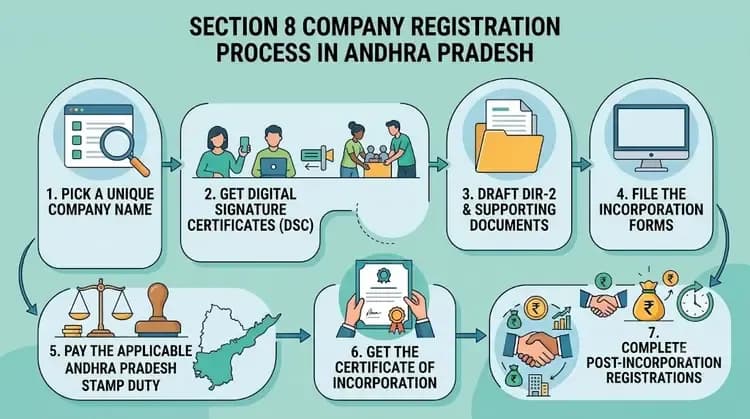
- Check your expiry date early: Confirm exactly when your current 12A/80G approval expires; most NGOs finalised in FY 2021–22 carried validity through to 31 March 2026, so don't assume your window matches someone else's.
- Compile your compliance record: Pull together audited accounts, activity reports, and any Form 10BD/Form 113 filings from the validity period, as assessing officers increasingly verify actual field activity rather than just paperwork.
- Log in to the Income Tax e-filing portal: Access the relevant registration section and select the renewal option for your NGO's PAN.
- File Form 105 (replacing Form 10AB): Submit the renewal application with your constitutional documents, financials, and activity evidence attached.
- Respond to any departmental queries: The Principal Commissioner or Commissioner of Income Tax (PCIT/CIT) may seek clarifications or additional evidence before approving the request.
- Receive your renewed registration: Once approved, download the updated certificate and note the new expiry date to plan the next renewal cycle.
- Continue donor reporting without interruption: Keep filing Form 113 (donation statement) and issuing Form 114 (donor certificates) on time; these obligations run independently of your renewal status.
Renewal deadline approaching?
Let our compliance team file your Form 105 renewal before your window closes
Fees and Timeline for Renewal
| Particulars | Government Fee | Professional Fee | Processing Time |
| Renewal of 12A and 80G Registration (Form 105) | ₹0 (no government fee) | ₹5,000–₹15,000, depending on complexity | 3–6 months from application, subject to department workload |
What Happens If You Miss the Renewal Deadline?
- Registration may expire: Your existing approval may no longer be valid after its expiry date.
- Delay may be condoned: In certain cases, you may request condonation of delay by providing a valid reason.
- Fresh application may be needed: If the delay cannot be condoned, you may need to apply again using the applicable forms.
- Tax benefits may be affected: The NGO could lose its tax-exempt status for the period in question.
- Donor deductions may be affected: Donations made during an invalid 80G period may not qualify for the applicable deduction.
- Cancellation can have significant consequences: in certain cases, it may lead to additional tax implications for the NGO’s accumulated assets.
Common Mistakes to Avoid
- Waiting until close to the expiry date instead of filing 6+ months in advance
- Assuming activity records aren't needed since "nothing has changed"
- Missing annual Form 113/Form 114 (formerly 10BD/10BE) donation filings, which weakens your renewal case
- Not updating the PCIT/CIT when your NGO's objectives change (a fresh filing is required within 30 days of such a change)
- Treating FCRA compliance as unrelated; a lapse there can affect scrutiny of your 12A/80G renewal too
- Assuming provisional registration converts automatically to regular status without a separate application
Need Help With 12A and 80G Renewal?
Let NGOExperts handle the renewal process while you focus on your NGO’s social work. Get professional guidance from documentation to filing.
Frequently Asked Questions
What is the deadline for renewal of 12A and 80G registration?
Which form is used for renewal of 12A and 80G registration now?
Is there a government fee for renewing 12A and 80G registration?
How long is a renewed 12A registration valid?
How long is a renewed 80G approval valid?
What happens if I miss the renewal window entirely?
Can a single form cover both 12A and 80G renewal?
Does renewal of 12A and 80G registration affect FCRA status?
What is accreted income tax, and when does it apply?
Author
A Content Strategist at NGOExperts, who focuses on NGO registration, 12A and 80G registration, FCRA compliance, income tax filing for non-profits, and CSR funding guidelines in India. I research and write our compliance guides in collaboration with our in-house Chartered Accountants and Company Secretaries, so every article reflects current tax and regulatory requirements for the NGO and non-profit sector.
Written by Aabha Garg. Last updated on September 18, 2026