
Need Help Writing Your NGO Project Report?
Create a clear, professional project report with the right objectives, activities, budget, impact plan, and supporting documents.
What Is an NGO Project Report?
Why Is a Good Project Report Important?
- It builds donor trust because a clear, honest report signals professionalism.
- It's often legally required for CSR funding, FCRA compliance, and some government grants.
- It improves your funding success rate, since donors compare reports and fund the clearest ones first.
- It records what you learned, helping your NGO run future projects better.
Types of NGO Project Reports
| Type of Report | Description |
| Annual Report | Reviews the NGO's activities and finances over the entire year, highlighting achievements and challenges. |
| Completion Report | Summarizes the overall results, outputs, and lessons learned after a project is completed. |
| Monitoring/Evaluation Report | Provides periodic updates on project progress, challenges, and learning outcomes. |
| Budget Comparison Report | Compares actual project expenditure against the original budget, explaining variances. |
| Impact Report | Analyzes the project's effects on beneficiaries and the community and offers recommendations for improvement. |
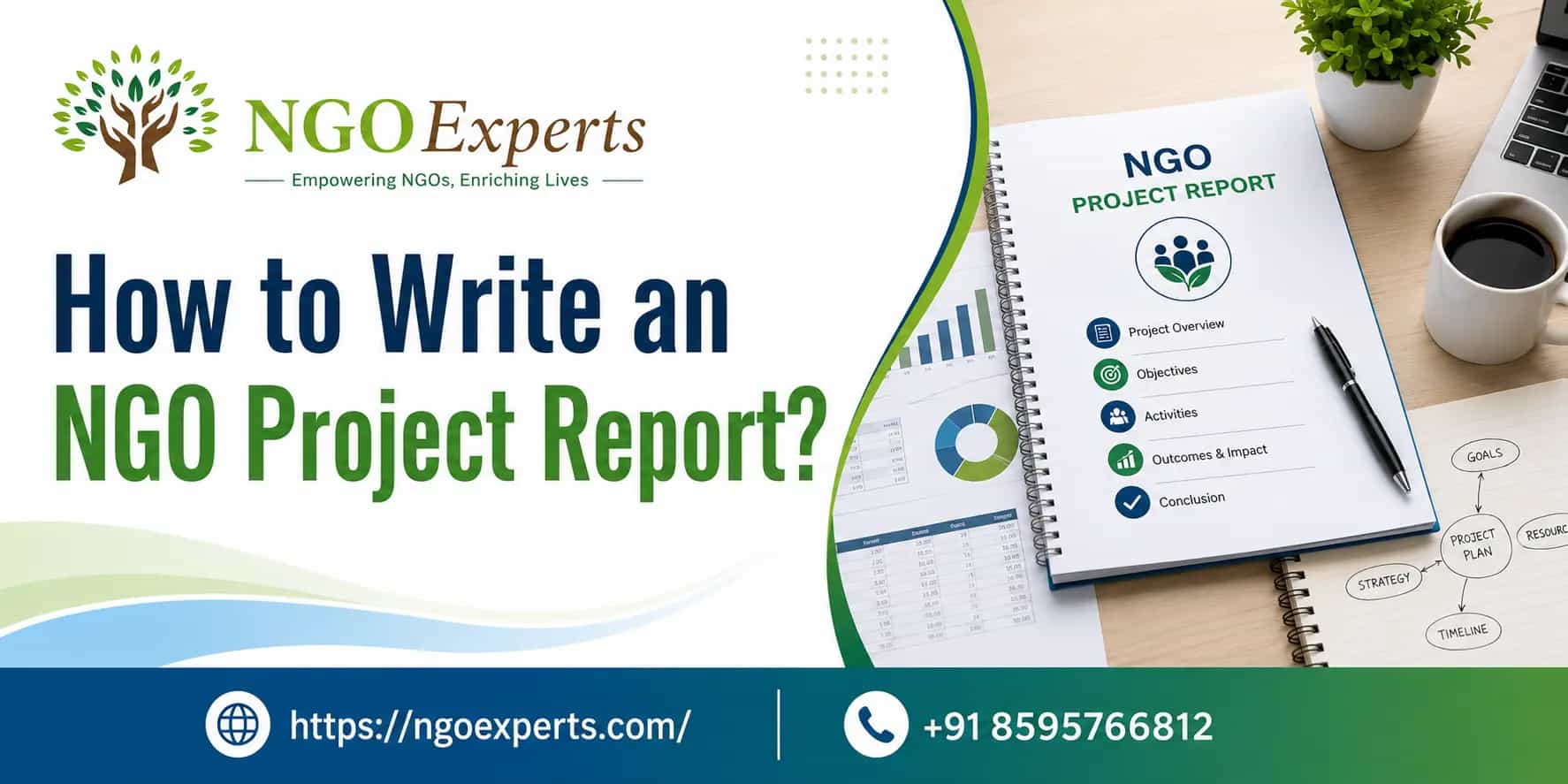
What Sections Should Your NGO Project Report Include?
- Cover page: project title, your NGO's name, location, and date
- Executive summary: a short overview of the project, its goal, and expected impact, written last but placed first
- Organisational profile: your NGO's mission, past work, and relevant experience
- Needs assessment: the real problem you're solving, backed by facts, not assumptions
- Project objectives: specific, measurable goals, not vague hopes
- Target beneficiaries: who exactly benefits, and how many people
- Activities and timeline: what you'll do, in what order, and by when
- Budget: a detailed, transparent breakdown of every cost
- Monitoring and evaluation plan: how you'll track progress and measure success
- Sustainability plan: how the project continues once the funding ends
- Annexures: your registration certificates, audited financials, and supporting documents
Want a Project Report That Attracts Funding?
We help NGOs prepare structured, donor-ready project reports aligned with funding and CSR requirements.
How Do You Write Each Section Well in an NGO's Project Report?
- Write the executive summary last. It should summarise your whole report in a few clear paragraphs, since it's often the only part a busy donor reads first.
- Make your needs assessment specific. Instead of "many children lack education," say "1,200 children in [named district] are out of school due to lack of nearby facilities."
- Set measurable objectives. Instead of "improve health," write "provide free health checkups to 500 families within 12 months."
- Break your budget into real line items. Donors trust a detailed table far more than a single lump-sum number.
- Attach your key certificates. Always include your 12A, 80G, and CSR-1 registration, since missing paperwork is one of the fastest ways to lose a serious donor's attention.
- Use simple language throughout. Short sentences, real numbers, and clear headings beat long, dense paragraphs every time.
What Documents Should You Attach to an NGO Project Report?
- Your NGO registration certificate, whether Trust, Society, or Section 8 Company
- 12A and 80G approval, showing your NGO is tax-exempt and donor-deduction eligible
- CSR-1 registration, required if you're seeking corporate CSR funds
- Recent audited financial statements
- Photos or evidence from past, similar projects, if available
When Is a Third-Party Impact Assessment Required for an NGO Project Report?
- Project cost: The project must cost ₹1 crore or more.
- CSR spending: The donor company's average CSR spending must be ₹10 crore or more.
- Assessment requirement: An independent third-party impact assessment becomes legally required.
- Why it matters: Larger CSR partners may expect the project report to consider this requirement from the beginning.
- For smaller projects: Third-party impact assessment is generally not required under these thresholds.
- Before applying: Check the requirement before seeking a large CSR grant to avoid compliance issues later.
What's the Difference Between a Report and a Proposal?
| Project Proposal | Project Report |
| Written before the project starts | Can be written before, during, or after the project |
| Used to request funding or approval | Used to document progress, activities, or results |
| Focuses on plans and expected outcomes | Focuses on actual work and outcomes |
| Explains what the NGO plans to do | Shows what the NGO has done or achieved |
| Best for seeking a new grant | Best for reporting project progress or completion |
What Mistakes Should You Avoid in an NGO Project Report?
- Copying a generic template without customising it to your actual project and donor
- Writing vague objectives, like "help the community," instead of specific, measurable goals
- Skipping the budget breakdown, offering only a single total figure
- Forgetting to attach 12A, 80G, or CSR-1 certificates, even when your NGO already holds them
- Ignoring the sustainability plan, since most donors want to know what happens after their funding ends
- Overloading the report with jargon, when simple, direct language always reads better
Turn Your NGO Idea Into a Fundable Project
Get professional support to structure your project concept, beneficiary plan, implementation strategy, budget, and expected outcomes.
- (MCA) Portal
Frequently Asked Questions
What is the most important part of an NGO report for investors?
How often should project reports be prepared?
Can I use the same template for different donors?
What documents should be attached to project reports?
What are common mistakes to avoid?
Who uses NGO project reports?
Author
A Content Strategist at NGOExperts, who focuses on NGO registration, 12A and 80G registration, FCRA compliance, income tax filing for non-profits, and CSR funding guidelines in India. I research and write our compliance guides in collaboration with our in-house Chartered Accountants and Company Secretaries, so every article reflects current tax and regulatory requirements for the NGO and non-profit sector.
Written by Aabha Garg. Last updated on September 14, 2026