
Quick Summary
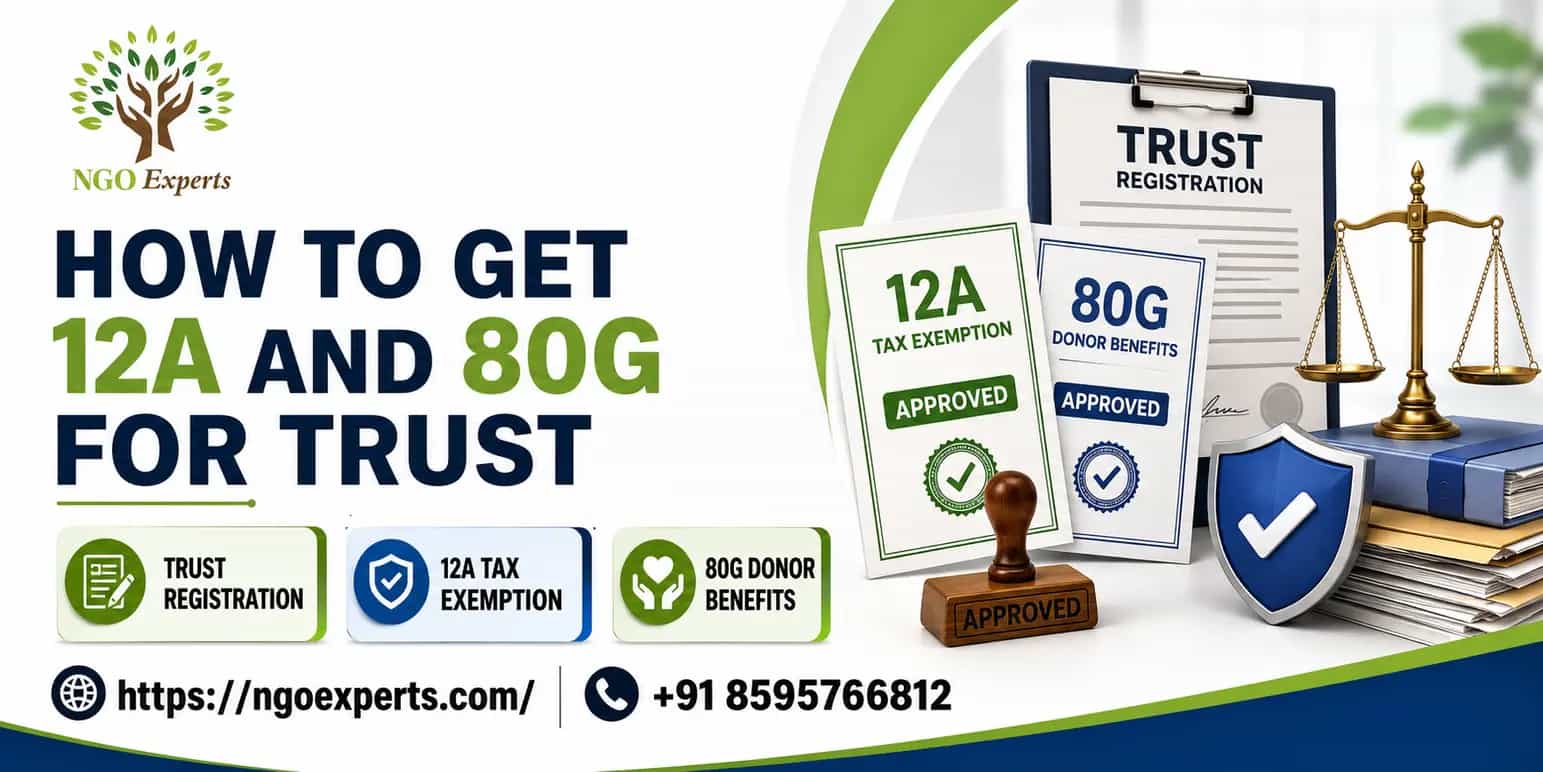
To get 12A and 80G registration for a trust in India, first prepare the required trust documents, apply through the Income Tax e-Filing portal using Form 10A, upload the supporting documents, and complete verification. 12A registration establishes income-tax exemption eligibility, while 80G registration enables eligible donors to claim tax deductions on donations.
Overview
Section 12A and 80G registration under the Income Tax Act are fundamental requirements for trusts seeking tax benefits in India. Section 12A provides income tax exemption to charitable trusts, while Section 80G enables donors to claim deductions ranging from 50% to 100% of their contributions.
The online mode of registration process has made it more accessible and transparent. However, the requirements remain stringent, requiring careful preparation and documentation. Understanding the benefits of both of these registrations can definitely enable your trust to operate effectively while maximising tax benefits for both the organisation and its supporters.
Understanding 12a and 80g Registration
12A (now 12AB): This is your trust's ticket to tax exemption. It helps in claiming tax exemption on your taxes derived from the charitable activities. Without this registration, the trust's income is taxable like any other entity.
80G: This has been proven to be extremely beneficial for donors. If they give ₹10,000, they can claim ₹5,000 (50%) or the full ₹10,000 (100%) off their taxes. In other words, 80G registration encourages people to donate more generously, as they can reduce their taxable income by contributing to your organisation. Donors can claim deductions ranging from 50% to 100% of their donation amount.
Why 12a and 80g Crucial for Trusts?
Many charitable trusts in India have registered for 12A and 80G to avail certain benefits from the government, such as tax exemption. Suppose you are getting ₹1 lakh in donations, without 12 a registration, you lose ₹30,000 to tax. This keeps more funds working for education, health, or poverty relief. However, CSR companies (big firms donating 2% profits) choose registered trusts for their legal structure. With the introduction of new laws by 2025, under the Indian Trust Act 1882, if you are an unregistered trust, you may lose grants from Niti Aayog or foreign funds, too.
Who Needs to Get 12A and 80G for Trust?
Trusts Eligible for 12A Registration:
- Charitable Trusts- Organisations working for public welfare
- Educational Trusts- Institutions promoting education and literacy
- Medical Relief Trusts- Healthcare service providers
- Religious Trusts- Organisations serving religious communities
- Environmental Trusts- Conservation and sustainability-focused organisations
Trusts Eligible for 80G Registration:
- Public Charitable Trusts- Serving general public welfare
- Educational Development Trusts- Promoting education and research
- Medical Relief Organisations- Providing healthcare services
- Rural Development Trusts- Working in rural areas
- Disaster Relief Trusts- Emergency response organisations
Key Eligibility Criteria:
- The trust has to be registered under the Indian Trusts Act 1882
- Charitable objects should be defined in Section 2(15) of the Income Tax Act
- No private benefit to trustees or their relatives is allowed
- To ensure genuine charitable activities with proper documentation
- Comply with the trust deed provisions
Benefits of Getting 12A and 80G for Trust in India
1. Tax Exemption Benefits (12A)
- Complete Income Tax Exemption: No tax on surplus income will be imposed from charitable activities
- Investment Income Protection: You can get a significant exemption on income from investments and deposits
- Property Income Benefits: Your rental income from trust properties remains tax-free
- Accumulated Funds: You will be able to gather funds for future charitable use
2. Donor Attraction Benefits (80G)
- Tax Deduction Incentive: Donors can claim 50% or 100% deduction
- Increased Funding: Your trust may receive higher donation amounts due to tax benefits
- Corporate Partnerships: Companies prefer 80G registered organisations for CSR
- Individual Donor Base: Attracts high-net-worth individual donors
3. Operational Advantages
- Credibility Enhancement: Government recognition often builds trust
- Banking Benefits: It becomes easy for your trust to open an account and obtain loan approvals
- Grant Eligibility: Direct access to government and international grants
- Legal Protection: Formal recognition provides legal recognition and safety
4. Compliance Benefits
- Structured Operations: It enables systematic record-keeping
- Transparency: Regular reporting ensures accountability
- Professional Management: Encourages best social welfare practices adoption
- Stakeholder Confidence: Builds trust among beneficiaries and supporters.
Step-by-Step Process for 12A Registration
Step 1: Prepare Your Trust Documents as discussed below.
Step 2: Register on Income Tax Portal
- Visit the Income Tax e-filing portal (www.incometax.gov.in)
- Log in using the trust's PAN
- Navigate to 'e-File' > 'Income Tax Forms' > 'File Income Tax Forms'
- Select Form 10A for 12A registration
Step 3: Fill Form 10A Online
Step 4: Upload Clear, legible scanned documents as required.
Step 5: Review all information carefully then Submit and Verify
Step 6: Follow Up
- The Assessing Officer will review your application
- Processing time: typically 7-10 days
- You'll receive the 12A registration certificate online
Step-by-Step Process for 80G Registration
Step 1: Gather the basic documents before starting
Step 2: Prepare Documents
Collect the following:
- Copy of 12A registration certificate
- Trust deed and registration certificate
- PAN card of the trust
- Audited financial statements for the last 3 years
- Income Tax Returns filed for the last 3 years
- Details of donations received and utilised
- List of activities carried out
- Bank statements
- Activity reports showing charitable work
Step 3: Log in to Income Tax Portal
- Visit incometaxgov.in
- Log in with Trust's PAN credentials
- Go to 'e-File' > 'Income Tax Forms'
- Select Form 10A for 80G registration
Step 4: Fill Form 10A, providing the detailed information
Step 5: Upload Supporting Documents
Upload all required documents:
- 12A registration certificate
- Audited accounts for 3 years
- Income Tax Returns
- Trust deed
- Activity reports
- Utilization certificates
- Any other relevant proof of charitable work
Step 6: Submit the Application after verification.
Step 7: Assessment and Approval
The Principal Commissioner or Commissioner will examine your application Processing time: 6 months to 1 year Upon approval, receive an 80G registration certificate
Requirements for 12A and 80G for Trust
| Requirement Category | 12A Registration | 80G Registration |
| Legal Foundation | Trust Deed Registration | Trust Deed Registration |
| Identity Documents | PAN Card of Trust | PAN Card of Trust |
| Address Verification | Registered Office Proof | Registered Office Proof |
| Governing Documents | Trust Deed (Original) | Trust Deed (Original) |
| Financial Setup | Bank Account Opening | Bank Account Opening |
| Activity Documentation | Charitable Activities Proof | Public Benefit Activities |
| Trustee Information | Trustee Details & IDs | Trustee Details & IDs |
| Financial Records | Initial Financial Statements | Initial Financial Statements |
| Application Forms | Form 10A Submission | Form 10G Submission |
Quick Tips for Successful Registration
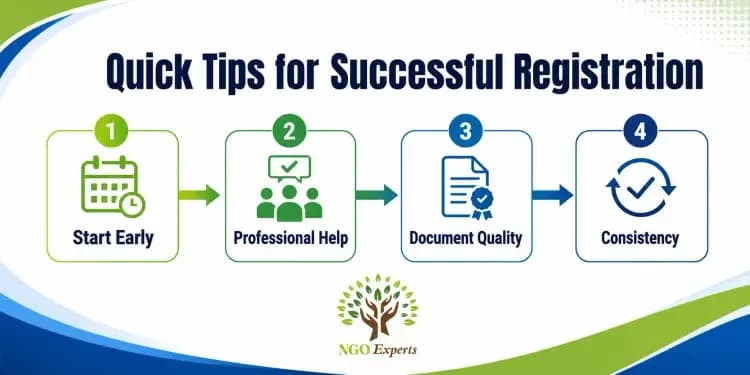
- Start Early: Begin preparation 3-4 months before the intended application
- Professional Help: Consider expert assistance, such as ngoexperts, for complex cases
- Document Quality: Ensure all scanned documents are clear and legible
- Consistency: Maintain consistent information across all forms and documents
Conclusion
Securing 12A and 80G registrations transforms your trust from a simple charitable entity into a professionally recognised, tax-efficient organisation capable of attracting significant funding and creating lasting social impact. Remember to maintain complete transparency, proper documentation, and timely compliance to retain these registrations. Consider seeking professional help from chartered accountants or a legal consultancy like NGOexperts to ensure a smooth application process.
Frequently Asked Questions
How long does it take to get 12A and 80G registration for a trust?
12A and 80G registration generally comes within 7-15 days.
Can a newly formed trust apply for both registrations simultaneously?
Yes, you can apply for both 12A and 80G together using the same set of documents, saving time and effort.
What are the registration fees for 12A and 80G?
There is no prescribed fees for 12a and 80g registration, professional fees may be charged for filing the form.
Can trustees receive any compensation from the trust?
Trustees generally cannot receive remuneration, but reasonable reimbursement of expenses incurred for trust work is permitted.
What happens if our application gets rejected?
You can file an appeal within 30 days or reapply after addressing rejection reasons. Professional assistance significantly reduces rejection chances.
Author
Srijita Chatterjee
I am a Content Specialist holding a Master’s degree and with over 5 years of experience in the creative arena. I specialize in breaking down complex concepts into clear, understandable insights that help my viewers deeply engage and retain. Known for my approachable and engaging style, I am committed to providing accurate, trustworthy information that empowers individuals and organizations to make informed decisions and achieve their goals.
Written by Srijita Chatterjee. Last updated on September 21, 2026